Ghost is an open-source blog platform for independent writers and publishers. It handles posts, email newsletters and paid memberships in one place, takes 0% of your subscription revenue, and starts at $18 a month billed yearly for the managed hosting version. There is no free managed plan.
That's the detail most Ghost fans leave out of the conversation. If you're used to Substack (free to start) or are deciding where to put your first serious blog, cost is the first thing to understand.
Below: what Ghost actually does, how each plan compares, what writing on it feels like, where it outperforms simpler tools, and what to pick if you'd rather not pay a monthly fee at all.
Ghost Blog Platform at a Glance
What the free tier or cheapest plan of each option actually includes. Verified at time of writing.
| Ghost (Self-hosted) | Ghost(Pro) Starter | Ghost(Pro) Publisher | Outrank Blogs (Free) | Substack | |
|---|---|---|---|---|---|
| Cost | Free (you run the server) | $18/mo billed yearly | $29/mo billed yearly | $0 up to 10,000 visits/mo | Free |
| Paid memberships | Yes, self-managed | No | Yes, 0% cut | No | Yes, 10% cut |
| Custom domain | Yes | Yes | Yes | Yes, free | $50 one-time |
| Blog at yourdomain.com/blog | Yes | No | No | Yes, free | No |
| Email newsletters | Yes (via Mailgun) | Yes | Yes | No (collects subscribers; you send) | Yes |
| SEO setup | Full control | Meta, sitemaps, canonicals | Meta, sitemaps, canonicals | Sitemap, IndexNow, structured data | Limited, gated by growth |
| Discovery network | None built in | None built in | ActivityPub (Ghost 6.0) | None | Substack app, Recommendations |
Prices from Ghost's pricing page, Substack's help center and Outrank's pricing page. Verified at time of writing.
What Is Ghost?
Ghost is an open-source CMS (content management system) built exclusively for publishing. A non-profit foundation runs it, which means there is no investor pressure to monetize your audience or take a cut of what you earn.
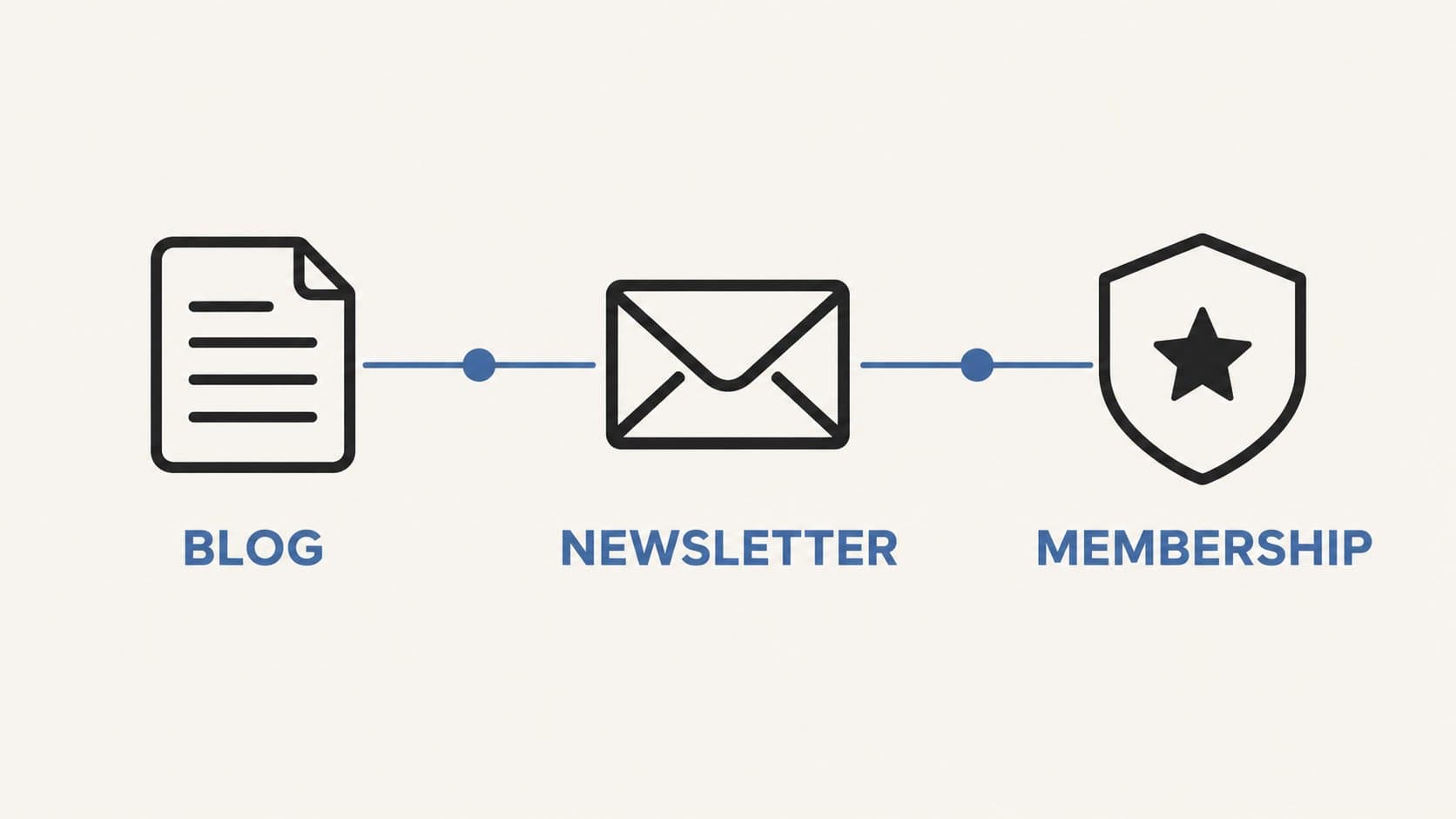
A Ghost site is three things in one:
A blog: clean URLs, editable meta titles and descriptions, XML sitemaps, canonical tags and structured data out of the box, with no plugins required.
A newsletter: posts go to your subscribers automatically after you publish, delivered via Mailgun or your own sending infrastructure.
A membership platform: free and paid subscription tiers, paywalled content, and direct reader revenue with Ghost keeping 0% of what you earn.
Ghost 6.0, released in August 2025, added two notable features: built-in analytics on Publisher plans and a social web reader built on ActivityPub. That second one means readers on Mastodon, Bluesky, Threads and Flipboard can follow and comment on your Ghost posts without needing a Ghost account. It is not a discovery engine on the scale of Substack's reader network, but it gives Ghost publications genuine public visibility they did not have before.
Ghost Blog Platform Pricing: Three Ways to Run It
Option 1: Self-host (free, but technical)
Ghost is open source. If you are comfortable with a Linux command line, you can run Ghost on your own server for the cost of a VPS, typically $5 to $20 a month on DigitalOcean, Hetzner or a similar provider. You own everything and pay no platform fee.
The real cost is your time. Self-hosters commonly run into: Mailgun integration that takes hours to configure correctly, memory exhaustion on entry-level server plans as traffic grows, and manual updates that can break the site if something goes wrong. It is workable, but it is not frictionless publishing.
Option 2: Ghost(Pro) Starter ($18/month billed yearly)
Ghost's entry-level hosted plan. You get a custom domain, the Ghost editor, newsletters and all the SEO controls. You cannot sell paid memberships or subscriptions on Starter.
If you want a clean, fast, SEO-ready blog on your own domain and writing is the whole job (no paid subscriber tier), Starter is the Ghost plan most bloggers should consider.
Option 3: Ghost(Pro) Publisher ($29/month billed yearly)
Adds paid memberships, multiple subscription tiers and 0% revenue cut. Built-in analytics are included from Ghost 6.0 onward. Publisher and higher plans are priced by total member count (free subscribers plus paid), so a large free list raises your monthly bill even if most readers never pay.
One constraint matters here: putting Ghost at yourdomain.com/blog (a subfolder install, rather than a standalone domain) requires Ghost's Business plan, which sits at a significantly higher price point than Starter or Publisher. For writers building a standalone publication this is not an issue; for anyone adding a blog to an existing company or personal site, it is a real blocker.
The Ghost Editor: What Writing on It Actually Feels Like
Ghost uses a card-based block editor. You write prose, and when you need to insert something (an image, a callout, a code block, a divider, a section visible only to paid members), you hit / and pick from the card menu.
It is genuinely one of the better writing experiences in any CMS. The editing pane is distraction-free, and there are no plugin dependencies between you and a published post. Markdown shortcuts work inline: ## starts an H2, **bold** bolds text, - starts a list. Writers already comfortable with Markdown will feel at home immediately.

For writers coming from Substack, the transition is mostly smooth. What you gain: more SEO control over each post, the ability to mix member-only and public content in the same publication, and full control of your sending domain. What you give up: Substack's one-click embeds for a wider range of media types, and the zero-configuration start.
Ghost's editor does not offer in-line SEO scoring or content suggestions before you publish. WordPress plugins like Yoast or Rank Math fill that gap for teams; Ghost assumes you know what you're doing. For a solo writer that is usually fine. For a multi-author blog where contributors need structured SEO guidance, it is a real gap.
Ghost's SEO: What It Actually Includes
Ghost ships with the SEO basics built in, not added on:
Per-post meta titles and descriptions: editable directly in the post editor without any plugin.
XML sitemaps: auto-generated and submitted to search engines.
Canonical tags: set on every post automatically.
Clean URLs: no query strings or date prefixes unless you want them.
Open Graph and Twitter card meta: social share previews work from day one.
Redirects file: manage 301 redirects without touching code.
Structured data: article schema markup baked into the theme layer.
For comparison, Substack's SEO features are more limited and can depend on publication size. Newer Substack publications may not receive an automatic sitemap, and Substack support has indicated that certain SEO controls become available only as a publication grows. On Ghost, sitemaps, canonical tags and meta controls are available from the first post.
For a broader look at how Ghost stacks up against WordPress, Webflow and other platforms on SEO, see our rundown of the best CMS for SEO.
What Ghost Doesn't Do Well
No platform is right for everyone. Ghost's limitations are real enough to be deciding factors:
No free hosted plan. This is the clearest gate. You're choosing between self-hosting (server administration and maintenance) or a minimum of $216 a year on Ghost(Pro). For a hobby blog or a business just getting started with content, that cost calculus matters.
No built-in discovery network. Ghost 6.0's ActivityPub support connects you to Mastodon and Bluesky, but there is nothing equivalent to Substack's Recommendations feature or the Substack app's reader feed. Your first readers come from your own promotion, not the platform.
Member pricing by list size, not paying subscribers. Your Ghost(Pro) plan tier rises with your total member count, including free subscribers. A 10,000-member list with 300 paying readers costs more than a 2,500-member list with 300 paying readers. Budget for this before you grow a large free list.
Subfolder installs are expensive. Adding Ghost at yourdomain.com/blog, rather than as a standalone site, requires the Business plan. If you want a blog integrated into an existing site, this changes the cost calculation significantly.
Ghost vs Substack: The Short Version
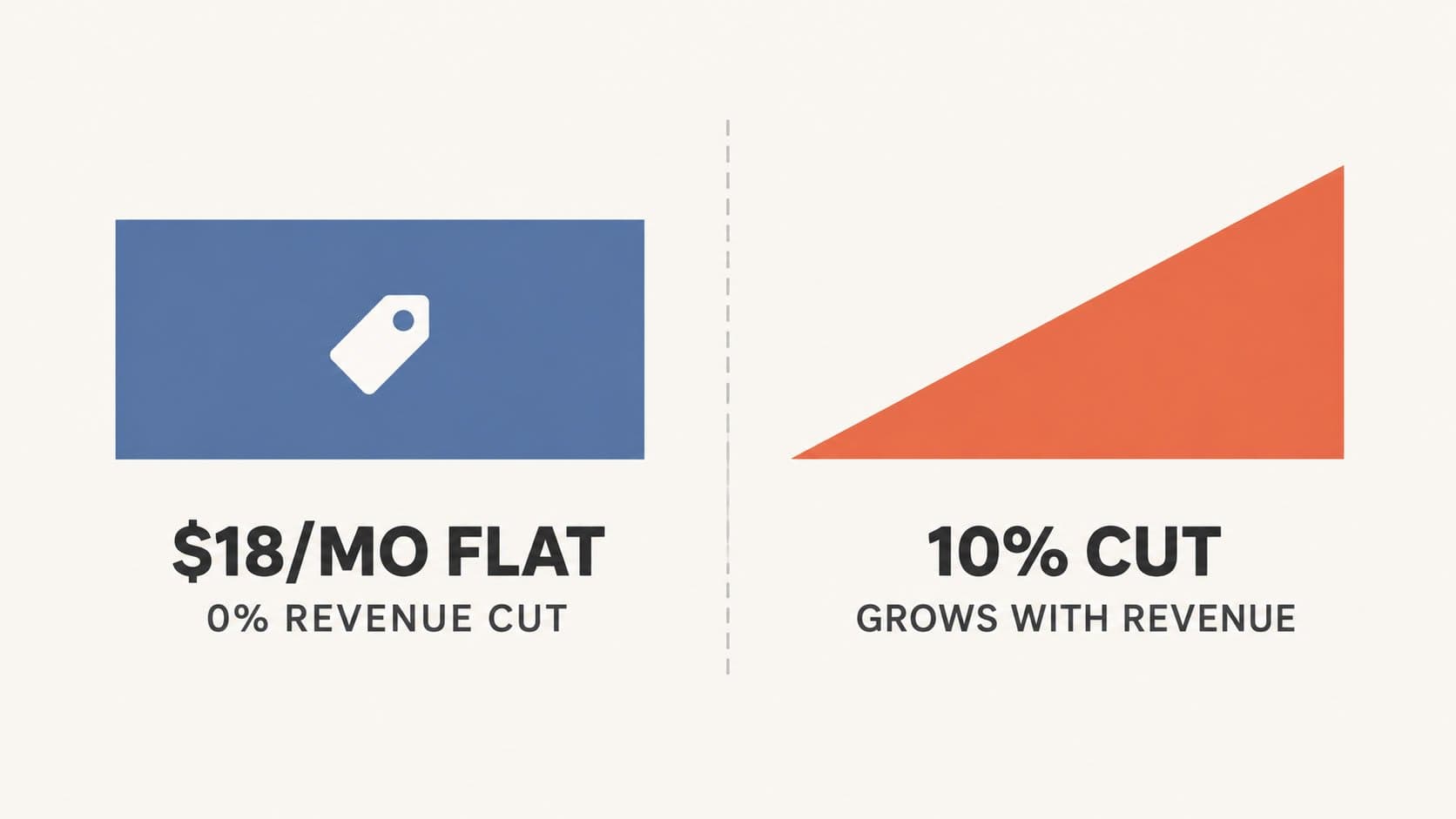
Ghost and Substack serve similar audiences: writers building a newsletter, paid publication, or both. The terms are almost opposite. Substack is free to start and keeps 10% of your paid revenue. Ghost charges a flat monthly fee and takes 0%.
The break-even is straightforward: once your paid subscription revenue passes roughly $3,500 a year (at 1,000 members), Ghost's flat fee is cheaper than Substack's 10% cut, and the gap grows from there. Below that, Substack costs you less.
For the full fee breakdown, break-even calculations at four revenue levels, a decision quiz, and a migration guide, the complete comparison is at Ghost vs Substack.
Why Trust This Article
We evaluated Ghost against Outrank Blogs and Substack on current pricing (verified from each platform's pricing pages at the time of writing), feature availability at each plan tier, SEO capabilities out of the box, ease of setup for non-developers, and whether a subdomain or subfolder blog on your own domain is included at no extra cost. Where Ghost is the stronger choice, we say so. This is an evaluation, not a sales pitch.
Pricing and plan features change. Verify Ghost's current tiers at ghost.org/pricing before making a decision.
The Free Alternative: Outrank Blogs
If your goal is a clean, fast, SEO-ready blog on your own domain with no monthly fee, and you do not need built-in paid memberships or an integrated email sender, Outrank Blogs covers the blog side of what Ghost offers.

What you get on the free plan:
Your own domain or a yourdomain.com/blog subfolder, both free.
Five templates with dark mode, email sign-up forms and cookieless analytics.
Sitemap, IndexNow, structured data, RSS and llms.txt set up automatically.
Up to 10,000 visits a month with unlimited posts, no credit card required.
What Outrank Blogs does not do: send newsletters itself. It collects subscribers and integrates with your existing email tool, but it is not a replacement for Ghost or Substack if the newsletter is the core product.
For a head-to-head comparison: Outrank Blogs vs Substack. To compare every option at each price point, paid memberships included, browse our Ghost alternatives guide.
When you're ready for more than a blog, Outrank's Organic Growth plan ($99/month) writes and publishes 30 SEO articles a month, handles keyword research, and builds internal links automatically.
Frequently Asked Questions
Is Ghost free to use?
The Ghost software is free and open source: you can run it on your own server at no platform cost. Ghost(Pro), the managed hosting version, has no free plan. Starter is $18 a month billed yearly (blog and newsletter only, no paid subscriptions), and Publisher, which enables paid membership tiers, starts at $29 a month billed yearly for up to 1,000 total members.
What is the Ghost blog platform used for?
Ghost is used for blogs, newsletters and paid membership publications. Independent writers, journalist newsletters and small media businesses use it to own their audience and keep 100% of subscription revenue. It handles email delivery, member management and content publishing in one platform, and the open-source code is freely available for anyone to self-host.
Is Ghost better than Substack for writers?
Ghost is better than Substack for writers who already bring their own audience, want full control over design, SEO and their sending domain, or earn enough from paid subscriptions that Substack's 10% cut costs more than Ghost's flat monthly fee. Substack is better for starting from zero: it is free, has a built-in discovery network, and requires almost no setup.
Does Ghost have good SEO?
Yes. Ghost includes editable meta titles and descriptions per post, auto-generated XML sitemaps, canonical tags, clean URLs, Open Graph social cards, a redirects file and article structured data, all without plugins. What it lacks is in-editor SEO scoring, which matters more for teams than for solo writers.
Can I use Ghost without knowing how to code?
Ghost(Pro) requires no coding. You pick a plan, connect a domain and start writing. Self-hosting Ghost requires familiarity with Linux, command line tools and server administration. Most non-developers are better served by Ghost(Pro)'s hosted plans.
What is the best free alternative to Ghost?
For a blog on your own domain without paid memberships, Outrank Blogs is free up to 10,000 visits a month and includes SEO basics out of the box. For a newsletter with paid subscriptions, Substack starts free and takes 10% of revenue. For a comparison of all Ghost alternatives at each price point, see the full Ghost alternatives guide.