

Here's what nobody says at the top of these guides: most fashion blogs don't get traffic because they were built on the wrong foundation, not because fashion blogging is dead.
Pick the right niche, get your blog live without overthinking the tech, and publish consistently for three to six months. That's the whole playbook. The rest is details.
Is fashion blogging still worth it?
This is the real question behind the search. The honest answer is yes, but not in the way it worked a decade ago.
The creators who built fashion blogs back then were competing with other blogs. Today you're competing with Instagram Reels, TikTok, Pinterest, and Substack newsletters. That sounds like bad news until you notice something: most of those platforms don't send you compounding traffic from Google. A blog does.
Write a solid post about "workwear outfits for petite women" and it can bring in readers for years. Post a Reel about the same topic and it disappears in 48 hours. Both have a place, but only one builds something that grows without you constantly feeding it.
The blogs that are dying are the generic ones. The ones publishing "10 spring fashion trends" that every other site already covered. The ones that exist are specific, useful, and actually answer what someone was searching for.
The niche question (and why most people get this wrong)
"Fashion blog" is not a niche. Neither is "personal style."
The blogs that rank are the ones that own a specific corner of the fashion world. A few examples of niches that actually work:
Sustainable fashion on a tight budget
Plus-size workwear and office dressing
Capsule wardrobes for specific climates or lifestyles
Thrift flipping and secondhand styling
Fashion for specific professions (teachers, healthcare workers, remote workers)
Size-inclusive styling for petite or tall women
The narrower it feels at first, the better. You can always expand later. You can't start broad and magically become the authority on everything.
A simple test: search your niche on Google. If nothing great comes up, that's an opening. If the first result is a comprehensive guide from a major publication, find a different corner.

Picking a platform
Most "how to start a fashion blog" guides send you down a WordPress.org rabbit hole. Setting up a hosting plan, buying a theme, installing plugins for SEO, configuring a sitemap: that's a lot of technical overhead for someone who just wants to publish.
Here's an honest read on the options actually worth considering.
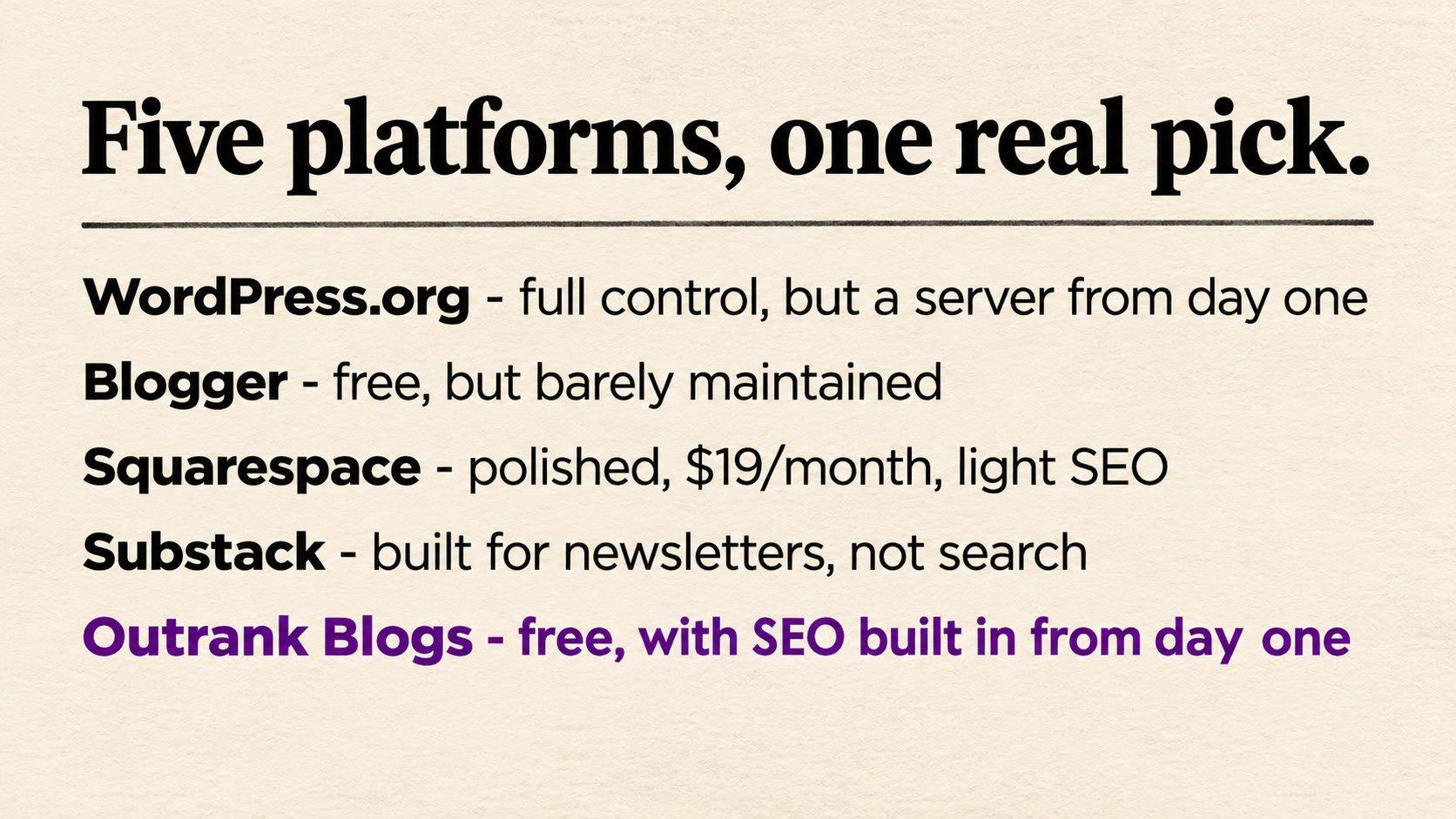
WordPress.org is the industry default, and for good reason: it's infinitely customizable, you own everything, and it scales to any size. The catch is that you're managing a server from day one. Expect to spend your first weekend finding a hosting plan, picking a theme, installing an SEO plugin, and configuring things that should just work out of the box. The right destination eventually. Not ideal when you haven't published a single post yet.
Blogger is free and Google-owned, which some people treat as a trust signal. It's also barely maintained. The editor is dated, design options are limited, and the SEO foundation is minimal. It'll get you online, but you'll likely migrate off it the moment you get serious.
Squarespace looks polished and is genuinely easy to use, but it starts at $19/month billed annually and its SEO capabilities are surface-level. If you're building a portfolio where the blog is secondary, it makes sense. If the blog is the whole point, you're paying for aesthetics over substance.
Substack is free and fast, and if your primary goal is building a newsletter audience, it's genuinely good at that. What it doesn't do is generate search traffic. There's no sitemap, no IndexNow, no structured data. You'll build an email list, not a blog that compounds on Google over time.
Outrank Blogs is what we'd recommend for most people starting out. Free up to 10,000 visits a month with unlimited posts, and everything SEO needs to function (sitemap, RSS, structured data, IndexNow) is already in place the moment you sign up. You get a free outrankblog.com subdomain or can connect a domain you already own. The block-based editor requires zero configuration. It's the closest thing to "start writing immediately" without giving up search as a long-term growth channel.
WordPress.org is the right choice eventually, when you have traffic and revenue to justify managing a server. Not on day one.
Start your free blog on Outrank Blogs
What your first five posts should actually cover
The first mistake most new fashion bloggers make: writing posts nobody was searching for. The second: ignoring search entirely and writing only for an imaginary existing audience.
The better approach is simple. Go to Google, type your niche keyword, and scroll down to "People Also Ask." Those questions are your first content calendar. If you're starting a thrift flipping blog, you might see "How do you thrift flip for beginners?" and "What items are best to thrift flip?" — two posts you could publish this week.
Post formats that consistently work for fashion blogs:
Roundups ("12 capsule wardrobe essentials for minimalists"): high search intent, good for affiliate links
How-to guides ("How to style wide-leg trousers if you're petite"): specific enough to rank, genuinely useful
Comparisons ("ASOS vs Mango for petite sizing"): commercial intent, works well for monetization later
Seasonal content ("Best office outfits for summer"): time-bound traffic that spikes predictably each year
Aim for eight to ten published posts before you start watching analytics. Google takes time to understand what a new site is about. Publishing one post and waiting a week isn't a fair test of anything.
The photography question
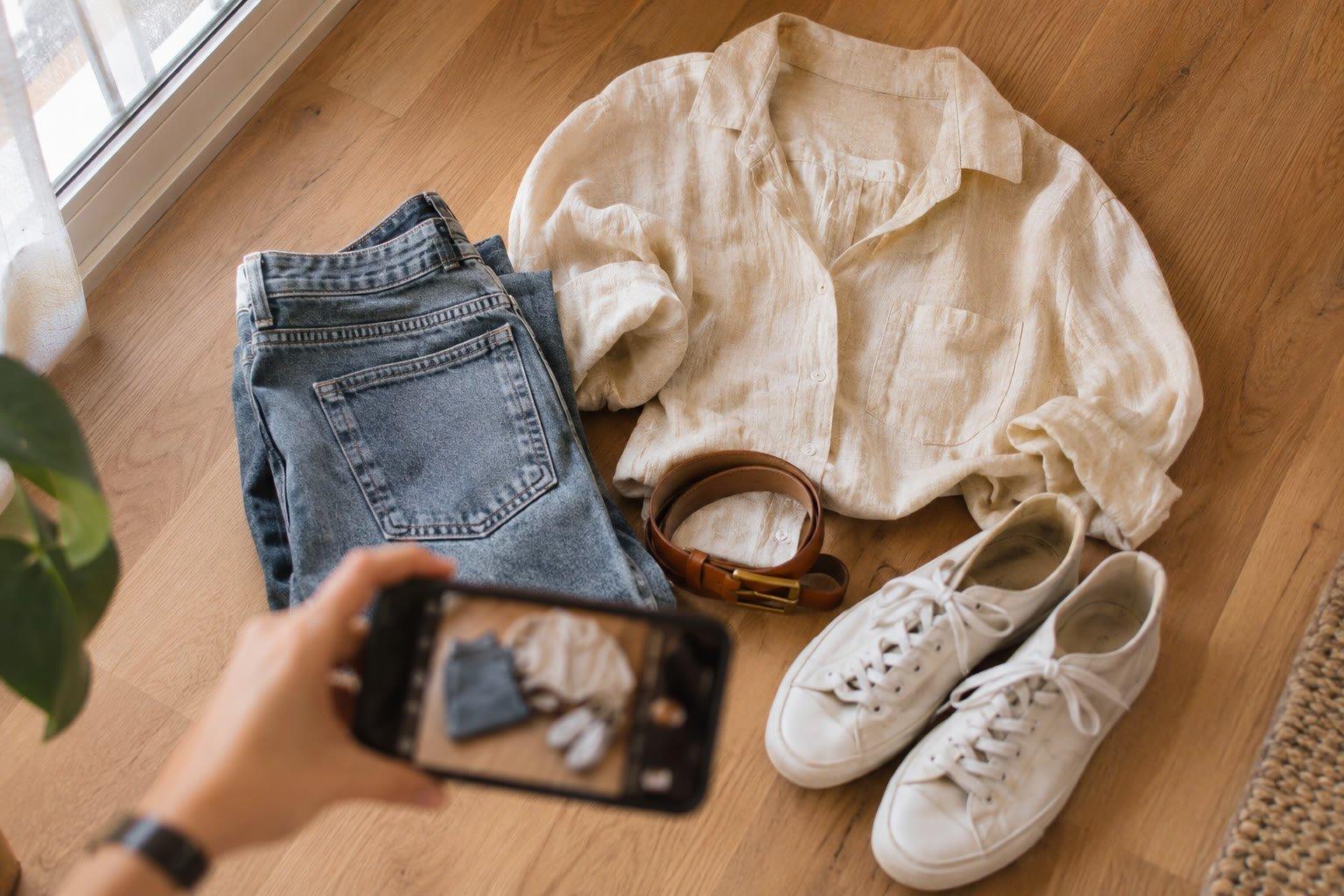
Fashion content lives on imagery. The good news: you don't need a professional camera to start.
An iPhone shot in decent natural light, lightly edited in Lightroom Mobile or VSCO, is good enough for your first fifty posts. The goal early on isn't editorial-quality photography. The goal is content that actually exists.
A mirrorless camera with a 50mm lens is worth considering in year two, once you have traffic and a sense of what your readers respond to. Not before.
Driving your first readers
Publishing and waiting for Google to show up takes months. For the first few months, you'll need to bring people to the blog yourself.
Three channels that genuinely move the needle for new fashion blogs:
Pinterest is consistently underrated. Pins get indexed by Google independently, they drive traffic for months after you post them, and the visual format fits fashion content perfectly. Create a board for each content category and pin every post you publish.
Instagram or TikTok won't build your SEO, but they build trust quickly. Use short-form video to show your personality and point people to the blog. Your bio link is the most valuable piece of real estate you have on those platforms.
An email list from day one. Most new bloggers skip this and regret it. Even a hundred subscribers after six months is a hundred people who actively asked to hear from you. That compounds in a way that social followers don't.
On monetization (and when to start thinking about it)
Don't build your fashion blog primarily around brand deals and affiliate links from the start. The blogs that actually make money built real readership first, and the affiliate income followed.
That said, set up affiliate accounts early so links are in place when posts start getting traffic:
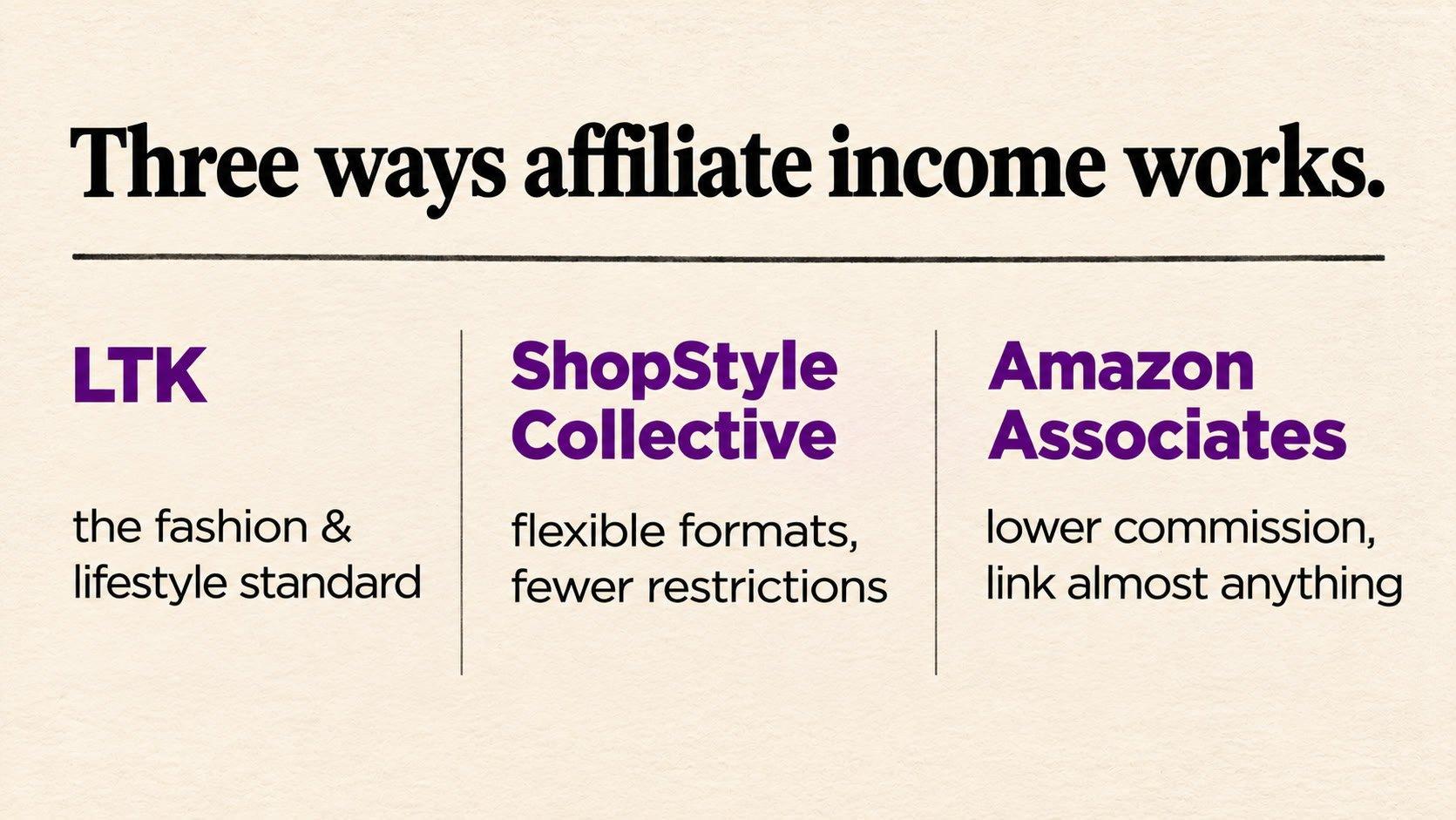
LTK (LikeToKnowIt): the standard for fashion and lifestyle bloggers
ShopStyle Collective: a good alternative with flexible formats
Amazon Associates: lower commission rates, but you can link almost anything
A roundup post that ranks for "best white sneakers under $100" can earn passive income for years without you touching it again. That's the version of fashion blogging worth building toward.
How we put this together
We're the team behind Outrank Blogs, a free hosted blog builder with SEO built in from the start. We evaluated platforms against the criteria that matter most when you're just starting out: cost, what SEO features are included by default, ease of setup, and whether you retain full ownership of your content and audience. We've tried to be honest about where other platforms make sense too, because sending you to a complex self-hosted setup when you just want to start publishing today would be bad advice.
Getting live
If you're using Outrank Blogs, setup takes about ten minutes. Pick a template, claim your subdomain or connect your own domain, and publish your first post. Sitemap, structured data, and IndexNow are live from the moment you create an account.
The Organic Growth plan ($99/month) adds 30 AI-written SEO articles per month, keyword research, and automatic internal linking. Worth considering once you've validated that your niche has real traffic potential and you want to scale faster. The free plan is genuinely useful on its own for everything covered in this guide.
Coming from Substack and weighing your options? We break down exactly how the two compare: Outrank Blogs as a Substack alternative
Frequently Asked Questions
Do I need to spend money to start a fashion blog?
No. Outrank Blogs offers a free plan covering up to 10,000 monthly visits with unlimited posts, and there's no time limit on it. The one cost worth considering early is a custom domain name, typically around $10-15 per year, which makes your blog look more established. Everything else (hosting, premium themes, SEO plugins) can wait until you have traffic.
How long does it take to get traffic to a new fashion blog?
Realistically, three to six months before you see consistent search traffic, assuming you publish regularly and target specific keywords with lower competition. Broader keywords in popular fashion niches can take a year or more. The blogs that grow fastest went narrow on their niche and published at least ten posts before expecting anything from Google.
Is Substack a good platform for a fashion blog?
Substack works well if your primary goal is building a newsletter subscriber list rather than growing through search. It doesn't support sitemaps or standard SEO features, so it won't help you rank in Google. If you want both search visibility and an owned audience, a dedicated blog platform like Outrank Blogs is the better foundation, with an email list built alongside it from the start.
What should I name my fashion blog?
Pick something specific to your niche rather than a generic personal name. Something like "The Thrift Edit" tells a new visitor immediately what to expect. A name tied to your niche is also easier to rank for and easier to explain to potential collaborators. You can rebrand later if you need to, but a vague name early tends to make it harder to position the blog clearly.
Can you make money from a fashion blog?
Yes, but it takes longer than most people expect. Realistically, twelve to twenty-four months before meaningful income. The main revenue streams are affiliate marketing (LTK, ShopStyle, Amazon Associates), brand sponsorships once you have a track record, and display ads through networks like Mediavine or Raptive once you reach their traffic thresholds. The blogs that get there started with a specific niche and a consistent publishing schedule, not a large existing following.