

Everyone who writes a guide like this will tell you to get WordPress.
Then they'll walk you through setting up hosting, installing plugins, picking a theme, and before you know it you've spent $200 and three weekends without writing a single word.
Here's the thing: you don't need any of that to start. You need a niche, a name, and a platform that won't get in your way. The rest comes after you've actually started writing.
The Platform Question: Settle It First
Most travel blog guides bury this. We're putting it up front.
The platform you choose determines your SEO ceiling, your monthly costs, and how much time you spend on setup instead of writing. Here's the honest comparison:
| Platform | Cost | Monthly visits (free tier) | Custom domain | SEO out of the box | Image-heavy layouts | Best for |
|---|---|---|---|---|---|---|
| Outrank Blogs | $0 | 10,000 | Yes | Yes (sitemap, RSS, structured data, IndexNow) | Yes | Starting free without sacrificing SEO |
| WordPress.org (self-hosted) | $3-10/month hosting | Unlimited | Yes | With plugins (Yoast, Rank Math) | Yes (theme-dependent) | Full control once you have traction |
| Wix | $0 on Wix subdomain; $17+/month for custom domain | Varies | Paid plans only | Basic | Yes | Drag-and-drop beginners |
| Squarespace | From $19/month | Unlimited | Yes | Decent built-in tools | Yes (standout galleries) | Design-first bloggers |
| Medium | Free | Platform-controlled | No | Low (Medium owns your SEO) | Limited (text-first) | Writers who want an audience, not search traffic |
| Substack | Free (revenue share on paid subscriptions); $50 one-time fee for custom domain | Newsletter-based | Yes (one-time $50 fee) | Low (newsletter-first, search is secondary) | No | Email-first writers |
The common advice, "just use WordPress," is not wrong. But it costs money and takes time to set up properly. If you are not sure yet whether this travel blog is going to stick, that is real money to risk.
Outrank Blogs is free for up to 10,000 visits per month, unlimited posts, and includes a sitemap, structured data, and IndexNow already wired up. No plugin setup. No hosting bill. Connect your own domain whenever you want.
One important thing to understand: free platforms are not all equal. Medium does not support custom domains at all, and both Medium and Substack have limited SEO value since neither is built for search traffic. Substack does offer a custom domain option, but it costs a one-time $50 fee and the platform remains newsletter-first by design. Outrank Blogs is free, supports a custom domain, and is built for SEO from the start. If you want traffic from Google, that distinction matters a lot.
Step 1: Pick a Niche Before You Pick a Name
Here is where most people go wrong.
They buy a domain like "JessicaTravels.com," then spend six months writing a bit of everything (budget backpacking, luxury hotels, family trips) and wonder why no one is reading.
Google rewards depth. So does an audience. A tighter niche means ranking sooner and building a following faster. Here are the ones with real audience and affiliate potential:

Budget travel: Hostels, cheap flights, free activities. High search volume, strong affiliate potential through booking platforms and travel cards.
Solo travel: Especially solo female travel. Dedicated, loyal audience with active communities and regular brand partnerships.
Family travel: Parents searching for kid-friendly itineraries, school holiday tips, and flying-with-kids guides. Evergreen, high intent.
Adventure travel: Hiking, trekking, diving, climbing. Strong gear affiliate programs and a genuinely passionate niche.
Local or regional travel: One city, one country, one region, in depth. Easiest way to build topical authority fast on a new domain.
Luxury travel: Lower volume but high-value audience. Hotel and credit card affiliate programs pay significantly more here.
Van life or slow travel: Growing fast, strong YouTube crossover, and a community that actually buys things.
Pick one. Write ten to twenty posts around it. Then expand.
You do not have to stay in that niche forever. You just have to give Google a clear signal about what your site is about before you start branching out.
Step 2: Choose a Name That Gives You Room to Grow
"BudgetBali.com" feels smart until you want to write about Portugal.
Pick something short, memorable, and flexible. Check domain availability before you commit. If you are starting with Outrank Blogs, you get a free yourname.outrankblog.com subdomain immediately. When you are ready for a custom domain, you can connect it without migrating your content.
What you actually need on day one
Nothing fancy. Here is the minimum:
Sign up for your platform and pick a template that handles images well.
Write an About page: who you are, where you have traveled, who the blog is for.
Add a Contact page.
Publish your first post (even a short one) so the blog is not empty when it goes live.
Submit your URL to Google Search Console so indexing starts.
That is it. No logo, no press kit, no thirty-post backlog. Those come later. Right now, your only job is to get something live.
Step 3: Write What People Are Actually Searching For
This is the part most travel blogs get wrong, and it is the whole game.
Your personality keeps readers coming back. Keyword-targeted posts bring new readers in from Google. You need both, and they serve different functions.

Two post types that consistently perform:
Destination guides: "Best things to do in Chiang Mai on a budget." "One week in Bali itinerary." "Is Porto worth visiting in January?" These target people actively planning a trip with real intent behind the search.
Practical how-to posts: "How to get a Vietnam e-visa in 2026." "Best travel insurance for solo travelers under 30." "How to find cheap flights using Google Flights." These rank for high-volume informational queries and position you as someone worth following.
For every post, start with what someone is actually typing into Google. The "People also ask" section on any Google search result is a free, underused source of real questions your readers have. Those are the posts you should write.
One note worth taking seriously: the AI Overview for "how to start a travel blog" explicitly warns against "generic AI-generated text." First-hand experience, specific numbers, and original detail still matter more in travel than almost any other niche. Write like a person who has actually been there.
Step 4: Get Your SEO Right from Day One
Travel is one of the most competitive niches in search. You are not going to outrank Lonely Planet for "things to do in Paris." Full stop.
The strategy that actually works for independent travel blogs:
Go hyper-specific. "Cheapest way to get from Bangkok to Chiang Mai in 2026" can rank. "Getting around Thailand" cannot, not on a new site. Specificity is your competitive advantage.
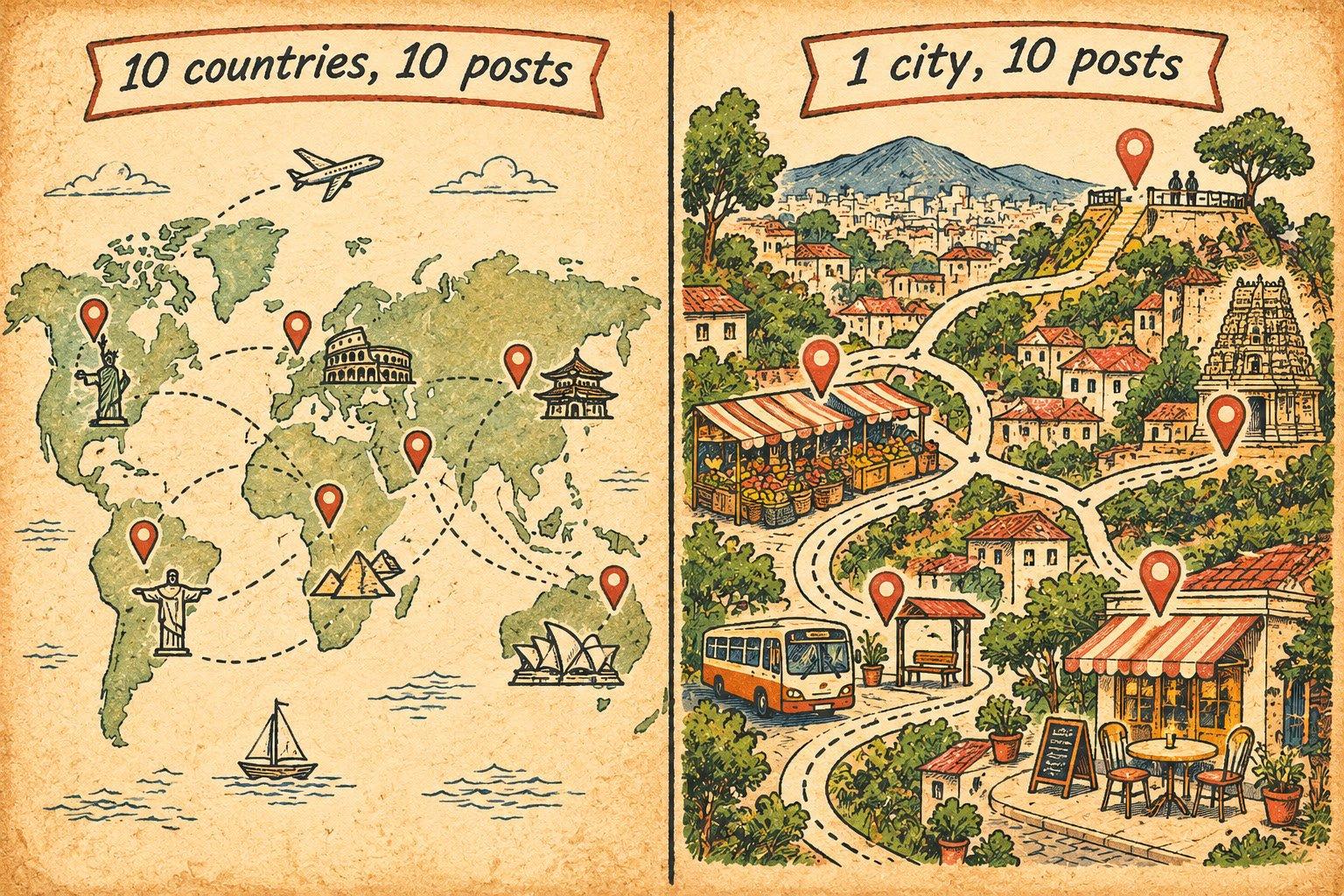
Build topical depth before spreading wide. Ten posts covering one destination from ten angles sends a stronger authority signal to Google than ten posts about ten different countries. Build a cluster first. Expand after.
Use structured data. FAQ schema, article schema, and how-to schema get your posts into rich results. If your platform does not handle this automatically, you will need to add it manually or install a plugin. Outrank Blogs handles it out of the box.
Get indexed fast. New posts should be in Google's index within days. Outrank Blogs uses IndexNow, which pings search engines the moment you publish. On WordPress, you will need a plugin or manual configuration.
Start building links early. Links still matter in travel. Guest posts on other travel sites, being listed in travel blog directories, pitching stories to regional tourism boards: these are all viable starting points that cost nothing but time.
For more on how to compare hosting options as your blog grows, see our guide to the best free blogging platforms and our broader guide on how to start a blog for free.
Why Trust This Article
We evaluated travel blogging platforms on the criteria that actually matter when you are starting out: cost to launch, monthly visit limits on free plans, custom domain support, what SEO tools are included without plugins, and how much setup a non-developer has to do. We also reviewed every top-ranking guide on this keyword and what they miss, particularly around free platform options that are not Medium or Substack. We build Outrank Blogs, so we have a direct stake in giving you an accurate picture of the landscape, including where competitors are genuinely stronger.
Start Your Travel Blog Free with Outrank Blogs
If you are weighing "start free and migrate later" against "pay for self-hosted WordPress from day one," the lower-risk path is to start free.
The first three to six months of a travel blog are about figuring out your niche, your voice, and what your audience actually responds to. You should not be paying for hosting while you sort that out.
Outrank Blogs gives you unlimited posts, up to 10,000 visits per month, a free subdomain, built-in sitemap, structured data, and IndexNow, all at $0. When you outgrow it, you can migrate. Most travel bloggers do not outgrow 10,000 monthly visits in their first year.
Get started with Outrank Blogs for free and have your first post live today.
If you are still deciding between platforms, our comparison of WordPress alternatives for bloggers breaks down the tradeoffs clearly.
Frequently Asked Questions
How do I start a travel blog for free?
Sign up for a free hosted blogging platform that includes SEO tools and allows a custom domain. Outrank Blogs is free for up to 10,000 visits per month, includes unlimited posts, a free subdomain, and built-in features like a sitemap, structured data, and IndexNow. You can connect your own domain at any time. Medium is also free but does not support custom domains and gives you no meaningful SEO control. Substack is free for publishing but charges a one-time $50 fee to connect a custom domain, and it is a newsletter-first platform with limited SEO value regardless.
How much does it cost to start a travel blog?
It can cost nothing if you use a free platform like Outrank Blogs. If you go the self-hosted WordPress route, expect to pay $3 to $10 per month for hosting and around $12 per year for a domain. Wix has a free tier but requires a paid plan to use a custom domain. Most travel bloggers do not need to spend anything until their traffic justifies the investment.
Do you need to travel to run a travel blog?
No. Many successful travel blogs are built primarily on research-based destination guides, packing lists, and visa how-to posts without the blogger visiting every place they write about. You can also build a hyper-local blog about your own city or region, which is one of the fastest ways to rank on Google as a new site. First-hand experience helps with reader trust and long-term retention, but it is not required to start generating search traffic.
How long does it take to make money from a travel blog?
Most travel blogs take 12 to 24 months before earning consistent income. The timeline depends on how frequently you publish, how well your posts rank on Google, and which monetization methods you use: affiliate links, display ads, sponsored content, or digital products. Consistency and niche focus matter more than any single post going viral. A realistic target for a focused, well-executed travel blog is $500 to $2,000 per month within 18 to 24 months.
What is the best platform for a travel blog in 2026?
For starting free with built-in SEO tools, Outrank Blogs is the strongest option. For maximum long-term flexibility, self-hosted WordPress is still the most versatile choice, though it costs money and has a steeper setup curve. Wix and Squarespace work well for design-focused bloggers who prefer a visual editor and do not mind paying monthly. Avoid Medium and Substack as your primary platform if organic search traffic is a priority. Medium does not support custom domains at all. Substack allows a custom domain for a one-time $50 fee, but it is a newsletter platform, not a search one, and your SEO ceiling there is low regardless.
What should my first travel blog post be?
Start with something a real traveler would search for. A destination guide, a practical packing list, or a trip recap for somewhere you have recently visited all work well. You can also write an introductory post about who you are and what the blog will cover, though that type of post rarely ranks on Google. The main priority in your first few weeks: publish something that gets indexed so Google starts building a picture of what your site is about.