

Both Substack and Medium are free, easy to set up, and have millions of readers. The difference is what happens after you publish: Substack gives you an email subscriber list you own and can take anywhere; Medium gives you access to 100 million readers but you never own the relationship. Neither is objectively better. Your goal decides which fits.
At a Glance: Substack vs Medium
| Substack | Medium | |
|---|---|---|
| Price to publish | Free | Free |
| Revenue cut | 10% of paid subscriptions + ~3% Stripe | None (Partner Program is opt-in) |
| Built-in audience | None (you build from scratch) | 100M+ monthly readers |
| Audience ownership | Full (exportable email list) | None (Medium owns the reader relationship) |
| Custom domain | Yes ($50 one-time fee) | Paid plans only |
| SEO strength | Moderate (weak without custom domain) | Strong short-term (borrows Medium's DA 95) |
| Monetization | Paid subscriptions (keep ~87%) | Partner Program (varies; ~$2–40+ per 1,000 views by reader type) |
| Post limit | Unlimited | Unlimited |
| Content ownership | Yes | Yes |
The Core Difference: Rented vs. Owned Audience
This is the question that matters most, and most comparison articles gloss over it.
When you publish on Medium, your content benefits from Medium's domain authority (DA 95) and its massive built-in readership. That's genuinely valuable. A well-written post can get picked up by Medium's distribution algorithm, surface in Google search, and reach tens of thousands of people who've never heard of you. It feels like a shortcut, because it is one.
The catch: Medium's readers are Medium's readers. You don't get their email addresses. You can't follow up with them directly. If Medium changes its algorithm, reduces distribution, or paywalls more content, your reach can drop without warning and there's nothing you can do about it.
Substack is the opposite model. You start with nothing unless you bring your own audience, but every person who subscribes gives you their email address directly. You can export that list at any time. If Substack shuts down tomorrow, you still have your subscribers. That's the difference between borrowing and owning.

Monetization: The Honest Numbers
Substack
Substack takes 10% of paid subscription revenue plus roughly 3% via Stripe for payment processing. Writers keep about 87 cents of every dollar from paid subscribers.
The tricky part: you need an audience first. Substack doesn't send you readers. If you're starting from zero with no existing following, early growth is slow. The platform's real value is in keeping what you build, not in building it for you.
Medium Partner Program
Medium's Partner Program pays writers based on how much time paying members spend reading their content. The formula was reworked in early 2025, and the numbers are worth understanding before you decide: earnings depend heavily on your reader mix. When most of your readers are paying Medium members, reported payouts can reach $20–$40 per 1,000 views; when your traffic is mostly non-members, it drops toward $2–$5 per 1,000 views. Readers need a $5/month Medium membership for your paywalled posts to earn anything at all.
94% of Medium writers who participate in the Partner Program earn under $100 per month.
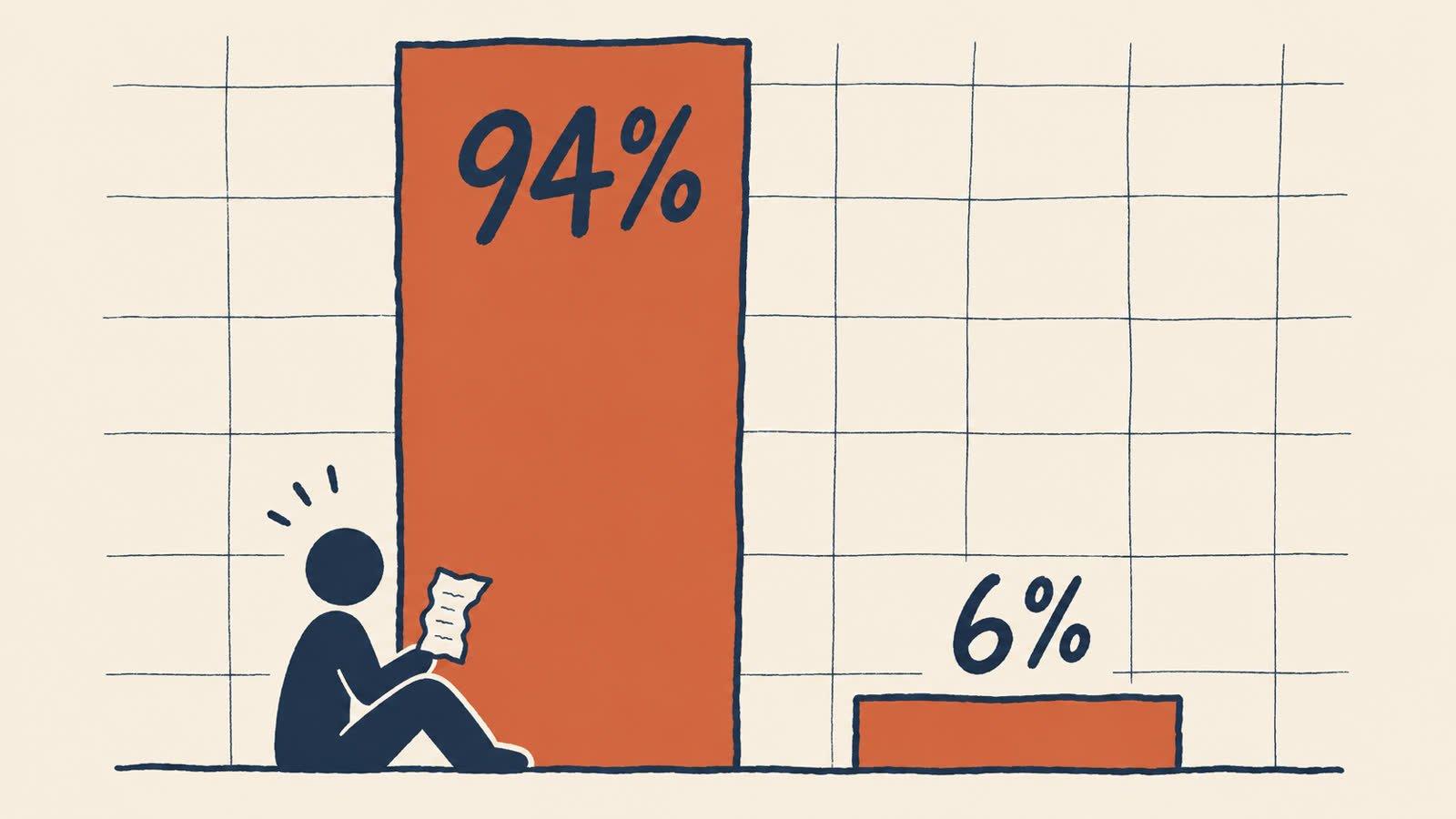
That's not a reason to avoid Medium. If your goal is exposure rather than income, Medium's distribution is legitimately powerful. But it's not a reliable income source for most writers, and anyone planning to earn meaningful money from their writing should factor this in.
SEO: The Part Most Articles Get Wrong
This is where almost every Substack vs Medium comparison falls short, so it's worth being specific.
Medium's SEO Situation
Publishing on Medium means your articles rank under medium.com, which has a domain authority of 95. That's one of the highest scores on the internet. A well-written piece on a low-competition topic can rank in days rather than months.
But there are two things worth understanding here.
First: that SEO equity belongs to Medium, not to you. If you later move your writing to your own site, you lose those rankings entirely. You're renting search visibility, not building it.
Second: Medium's paywalled content has limited indexability. Google can crawl a preview of paywalled posts, but the full article often doesn't get indexed the way a free public post would. If you're publishing behind a paywall on Medium, you're trading SEO reach for the small possibility of Partner Program earnings.
Substack's SEO Situation
Substack's SEO is weaker by default. The domain authority of substack.com is lower than medium.com, and your newsletter URL sits on a subdomain (yourname.substack.com), which affects how Google treats it.
The fix: Substack offers a custom domain option for a one-time fee of $50. Moving to yourdomain.com gives you a standalone domain you can build authority on over time. If you're thinking in terms of long-term search traffic, this matters significantly. The trade-off: you lose whatever subdomain benefit you had while your new domain builds authority from scratch.
Bottom line: Medium gives you borrowed ranking power now. Substack with a custom domain gives you owned ranking power later. If owning your SEO foundation matters, neither platform is the ideal setup compared to a standalone blog on your own domain built from the start.

Discovery: How Do Readers Actually Find You?
This is where Substack made a significant move back in 2023. Substack Notes launched in April 2023 as a built-in short-form content feed that acts as a social layer inside the platform. Writers use Notes to reach each other's subscribers through short posts and cross-recommendations. As of 2025 and into 2026, Notes has become the primary growth mechanism for established Substack writers. It rewards writers who already have some audience, since recommendations carry more weight when they come from accounts with subscribers.
Medium's discovery relies on its recommendation engine and human curation. If your post gets picked up by a Medium curator or surfaces in a popular topic feed, you can get a surge of new readers. If it doesn't, it can sit unread regardless of how good it is.
Neither platform guarantees discovery. The pathways are just different:
Medium: Algorithmic and curator-based. High upside if you get picked up, limited if you don't.
Substack Notes: Network-based. Growth comes from recommendations by other Substack writers and your own promotion outside the platform.
Google search: Medium wins short-term; Substack with a custom domain can compete over a longer time horizon.
Who Should Use Which
Choose Medium if:
You have no existing audience and want maximum immediate reach
You're writing general-interest content on topics Medium's readers search for
Monetization from your writing isn't the goal right now
You're comfortable with readers staying on Medium's platform, not following you elsewhere
Choose Substack if:
Building a direct relationship with readers (not just reach) is the priority
You're planning a paid newsletter at some point
You're bringing an existing audience from another channel (social media, podcast, existing blog)
You want your subscriber list to be portable and owned by you, not the platform
If you're deciding between newsletter-first platforms more broadly, it's also worth reading Ghost vs Substack, which covers how Ghost compares for writers who want more control over design and monetization without a platform middleman.
What If Neither Fits?
There's a use case both platforms handle poorly: someone who wants their writing to rank in Google over time, on a domain they own, without managing hosting, plugins, or technical setup.
Medium doesn't let you build your own search presence. Substack requires a $50 custom domain purchase and starts from zero authority. Both platforms take a cut if you monetize, and neither is designed around SEO as a primary growth channel.
If what you actually want is a free, SEO-ready blog you own and control, Outrank Blogs is worth considering. The Free plan is $0 for up to 10,000 visits per month with unlimited posts. You get a free subdomain or can connect your own custom domain, and the platform ships with a sitemap, RSS, structured data, and IndexNow out of the box. There's no newsletter lock-in, no platform algorithm deciding your reach, and no cut taken from your audience.
For a broader look at how the options compare, the best free blogging platforms guide covers the full field, and the free blog alternatives hub has a comparison for each major platform if you want to go deeper on any one option.
How We Compared These Platforms
We evaluated Substack and Medium against the criteria that actually matter when choosing where to put your writing: pricing, audience ownership, custom domain support, SEO positioning, monetization terms, and ease of setup.
We looked at real reported earnings from the Medium Partner Program in 2024 and 2025, the current pricing and revenue terms for Substack's paid subscription model, the one-time cost of Substack's custom domain option, and the current state of Substack Notes as a growth mechanism. Any pricing or feature detail in this article should be re-confirmed before you make a final decision. Both platforms adjust their terms without much notice, and what's accurate today may change.
Frequently Asked Questions
Is Substack or Medium better for beginners?
If you have no existing audience, Medium gives you better immediate reach because 100 million monthly readers are already on the platform and your posts can get surfaced to them. Substack requires you to build your own subscriber list from scratch. For someone starting with zero following, Medium lowers the barrier to getting your first readers. If you're bringing an existing audience from somewhere else, Substack's ownership model becomes much more attractive.
Can you make money on Medium without a large following?
Yes, but the amounts are modest. The Medium Partner Program pays based on how much time paying members spend reading your content, so earnings vary significantly: reported rates run from roughly $2 to $40 or more per 1,000 views depending on how many of your readers hold paid Medium memberships. Most writers who participate earn under $100 per month. It's not a reliable income stream for most writers, but it can generate small amounts even without a large audience if your content gets picked up by Medium's recommendation engine.
Does Substack own your subscribers?
No. Substack lets you export your full subscriber list at any time, and that list is portable: if you leave Substack, you take your subscribers with you. This is one of Substack's most significant advantages over Medium, where you have no access to reader contact information.
Is Substack free?
Publishing on Substack is free. If you want to offer a paid subscription tier, Substack takes 10% of revenue plus Stripe's processing fee of around 3%, so you keep roughly 87% of what readers pay. The optional custom domain connection costs $50 as a one-time fee, not a recurring charge.
Which platform is better for SEO?
Medium gives you stronger short-term SEO because your articles rank under medium.com, which has a domain authority of 95. Substack's SEO is weaker by default, but adding a custom domain ($50 one-time) lets you build your own domain authority over time. If you want to own your search rankings in the long run, neither platform is ideal compared to a standalone blog on your own domain built from the start.
Can you use both Substack and Medium at the same time?
Yes, and some writers do. The typical approach is to publish the original on one platform and cross-post a partial version or excerpt to the other with a link back to the full piece. Publishing identical full posts on both can create duplicate content issues in Google's index, which could suppress rankings for both. Using one as your primary home and the other as a distribution channel generally works better than treating both as equals.
What's a free alternative to both Substack and Medium?
Outrank Blogs is a free hosted blog builder ($0 for up to 10,000 visits per month, unlimited posts) that includes SEO basics like a sitemap, RSS feed, structured data, and IndexNow out of the box. You can connect your own domain or use a free subdomain, and there's no cut taken from any revenue you generate. It's built for writers who want a simple, SEO-ready blog they own rather than a newsletter-first or community platform.