If you are deciding where to publish your newsletter, the short answer is: Substack if you want built-in discoverability and plan to charge for paid subscriptions, Beehiiv if you want a serious publication with growth tools from day one, or Ghost if you are technical and want full control with no revenue cut. But if you also want your writing to rank on Google and live at a URL that readers can share and return to, none of those three do that as cleanly as a web-first approach. This guide breaks all of that down.
At a Glance: Free Newsletter Platforms Compared
Note: Limits reflect verified published terms at the time of writing. Free-tier terms change; confirm directly at each platform's pricing page before committing.
| Platform | Free Subscriber / Send Limit | Custom Domain (Free) | Indexed Web Posts | Best For |
|---|---|---|---|---|
| Substack | Unlimited subs, unlimited sends | No ($50 one-time fee) | Yes (limited SEO control) | Writers building paid subscription revenue |
| Beehiiv | 2,500 subs, unlimited sends | Yes | Yes (clean publication site) | Growing a newsletter publication with referrals |
| Ghost (self-hosted) | Unlimited subs, unlimited sends | Yes | Yes (strong SEO control) | Technical creators who want full ownership |
| Kit (ConvertKit) | 10,000 subs, unlimited sends | No (paid plan) | No (email only) | Creators selling courses and digital products |
| MailerLite | 500 subs, 12,000 sends/mo | No (paid plan) | No (email only) | Small businesses sending regular email newsletters |
| Mailchimp | 250 subs, 500 sends/mo | No (paid plan) | No (email only) | Beginners (but free tier is now very restrictive) |
| Outrank Blogs | Unlimited posts, 10,000 visits/mo | Yes | Yes (SEO-first, IndexNow) | Writers who want search traffic alongside subscribers |
How We Evaluated These Platforms
We compared each platform across five areas:
Subscriber and send limits: what the free tier actually gives you, and what triggers a paywall
Content ownership and portability: whether you can export your list and your posts if you leave
Web presence and SEO: whether your content lives at a URL that Google indexes and readers can discover without being subscribers first
Custom domain support: does the free plan let you publish at your own URL, or are you stuck on their subdomain?
Time to first post: how long setup realistically takes for someone starting fresh
The ranking below reflects free-plan value, not total popularity or feature depth on paid tiers.
1. Substack: Best for Writers Building a Paid Newsletter Business
Substack's free tier is genuinely unlimited in the ways that matter most when you are starting: no cap on subscriber count, no limit on how many emails you send, no expiration date on the free plan. That is unusual and worth appreciating.
The business model is worth understanding clearly before you start. Substack is free to use for free newsletters. When you turn on paid subscriptions, Substack takes 10% of your revenue (plus Stripe's standard processing fees). That is fine if you are testing whether readers will pay. It is less fine if you have a large paying readership and are losing a significant share of revenue to platform fees.
What Substack does well on the free plan:
The Recommendations network and Substack Notes actively surface your writing to other Substack readers, giving you a genuine discovery advantage no other platform in this list has
A clean publication website where your posts are publicly archived and readable by non-subscribers
Built-in commenting and community features that function like a lightweight forum under each post
Simple setup: you can publish your first post within an hour of signing up
What Substack does not do well:
Web SEO is limited: posts are indexable, but you have minimal control over metadata, structured data, or your site's crawl architecture, and your content lives at [yourname].substack.com by default rather than a domain you own
Custom domain connection costs a one-time $50 fee and only changes your web address, not your sending address, which stays at [yourpublication]@substack.com permanently
You cannot customize the reading experience much beyond what Substack's interface provides
If your primary goal is building a paid newsletter and you want the platform to help you find new readers, Substack is the right starting point. If you also care about Google finding your writing, it is not the strongest tool for that.
Outrank Blogs vs. Substack: full comparison
2. Beehiiv: Best for Creators Serious About Newsletter Growth
Beehiiv was built by former Morning Brew team members specifically for newsletter operators who want to grow fast. The free plan supports up to 2,500 subscribers with unlimited sends, and unlike Substack, Beehiiv does not take a cut of your paid subscription revenue.
The platform's growth tools are what set it apart. The referral program, recommendation network, and built-in segmentation capabilities are all designed for the kind of systematic audience building that serious newsletter publishers do.
What Beehiiv does well on the free plan:
Custom domain included: connect your own domain at no additional cost
Publication-style website where posts are publicly viewable and indexed, with better SEO fundamentals than Substack's hosted pages
Clean analytics: open rates, click rates, subscriber growth graphs, and source attribution
No platform cut on paid subscriptions (you pay a flat monthly fee on paid plans instead)
Recommendation network included, which can surface your newsletter to readers of other Beehiiv publications
What Beehiiv does not do well:
2,500 free subscriber cap is a real ceiling: if your list grows quickly, the upgrade decision comes sooner than expected
If you want your content to rank heavily in Google search, Beehiiv is better than Substack but still not as strong as a blog-native approach
Monetization features (paid subscriptions, ad network, boost network) require a paid plan
Beehiiv is the best free starting point for creators who treat their newsletter as a serious publication and want growth mechanics baked in. The 2,500 subscriber limit means it works best as a launch platform with a clear plan for upgrading when the time comes.
3. Ghost (Self-Hosted): Best for Technical Creators Who Want Full Control
Ghost is open-source blogging and newsletter software. The self-hosted version is completely free: no subscriber limit, no email send limit, no platform fee on paid subscriptions (beyond Stripe's processing fees), and full custom domain support from day one.
The catch is infrastructure. You need a server, you manage your own email deliverability (typically via Mailgun or a similar service), and you handle updates and backups yourself. A basic VPS runs roughly $5 to $10 per month. If Ghost.org's managed hosting (Ghost Pro) is more appealing, the Starter plan begins from $9/month billed annually (verify current pricing at ghost.org/pricing, as this has been updated).
What Ghost (self-hosted) does well:
The best SEO control in this comparison: full ownership of metadata, URL structure, sitemaps, structured data, and crawl settings
Your content lives at your domain, not a platform's subdomain, from the beginning
No revenue cut on paid subscriptions
Blog and newsletter in one: posts go out to subscribers via email and live as web pages simultaneously
What Ghost does not do well:
Setup is measured in hours, not minutes: DNS, email deliverability configuration, and server maintenance are real tasks
No audience discovery network: you grow your subscriber list entirely from external sources, with no equivalent of Substack's Recommendations
Running your own server means you are responsible when things break
Ghost is the right call for developers, technical founders, and creators who want maximum control and are comfortable with infrastructure. If the words "SMTP configuration" read as a weekend project rather than a wall to climb, Ghost is excellent. If they read as a wall, one of the hosted options in this list will serve you better.
Setup guides: adding a blog to Next.js, Vercel, Netlify, Cloudflare, and more
4. Kit (ConvertKit): Best for Creators Who Already Have a Product to Sell
Kit (formerly ConvertKit) is email marketing software aimed at creators who are running a business around their content: courses, memberships, digital downloads. The free plan supports up to 10,000 subscribers with unlimited sends, which is the most generous subscriber cap in this comparison by a significant margin.
That generosity comes with a trade-off. The free plan limits you to a single automated email workflow, such as a welcome sequence. If you want multi-step automations, subscriber tagging, or advanced segmentation, you are on a paid plan.
What Kit does well on the free plan:
10,000 free subscribers is the most room to grow before hitting a paywall
Strong integrations with creator commerce platforms: Gumroad, Teachable, Podia, and similar
Solid list hygiene tools and deliverability reputation among creator-focused senders
Clean landing page builder for growing your subscriber list with signup forms
What Kit does not do well:
Your content is inbox-only: Kit has no public blog or post archive where non-subscribers can read your writing and Google can index it
One automation limit on the free plan is genuinely constraining for anyone doing more than a simple welcome email
Kit's identity is email marketing, not publishing: it is not built for the writer who thinks of their newsletter as a body of work they want people to discover
Kit is the strongest free option if you are building an email list to complement an existing product business. It is a weaker fit if your primary goal is growing through content discovery, because your writing does not exist on the web until a reader is already subscribed.
5. MailerLite: Best All-Around for Small Business Email Newsletters
MailerLite is the clearest example of a newsletter platform built for small businesses rather than individual creators. The free plan was cut from 1,000 to 500 subscribers in September 2025, with 12,000 email sends per month remaining unchanged. The drag-and-drop editor is genuinely clean and quick to use.
What MailerLite does well on the free plan:
Easiest drag-and-drop editor in this comparison for non-technical users
Professional-looking templates that require no design skill to use well
Landing pages and embedded signup forms available on the free tier
Automation workflows included, which most competitors put behind a paywall
What MailerLite does not do well:
500 subscriber limit is low: a modestly growing list will hit it quickly
No public post archive or indexed web presence: everything is inbox-only
Advanced reporting, A/B testing, and multi-step automations are behind paid plans
MailerLite branding appears on all free-plan emails
MailerLite is the right choice for a small business that sends a regular newsletter to existing customers and wants a polished, simple tool to do it. It is not a content publishing platform for writers who want new readers to find them through search.
6. Mailchimp: The Famous Name With a Now-Very-Restricted Free Tier
Mailchimp was the default newsletter choice for years. For most new users starting today, it is no longer the right default. The free plan now caps you at 250 contacts and 500 monthly sends (with a daily limit of 250), which means a list of 250 people can only receive two emails per month on the free tier before you are blocked.
Mailchimp also counts unsubscribed contacts toward your 250 limit, so your usable list is smaller than the headline number suggests.
What Mailchimp still does well:
The widest name recognition in email marketing, which has value if you are presenting to clients or integrating with e-commerce tools
Extensive integration ecosystem: Shopify, WooCommerce, Squarespace, and hundreds of others
The drag-and-drop editor is genuinely beginner-friendly and has been iterated for over a decade
What Mailchimp does not do well:
250 contact limit is the most restrictive free tier in this comparison
500 monthly sends means you cannot send weekly emails to even a modest free list without upgrading
Automation workflows removed from the free plan entirely as of June 2025
No public web archive or SEO-friendly post hosting
We include Mailchimp here because it still generates a lot of search queries and people deserve an honest answer: if you are starting from scratch, there are better free options above. If you are already on Mailchimp with a list under 250 contacts and it is working for you, there is no urgent reason to migrate.
7. Outrank Blogs: Best for Writers Who Want Search Traffic Alongside Subscribers
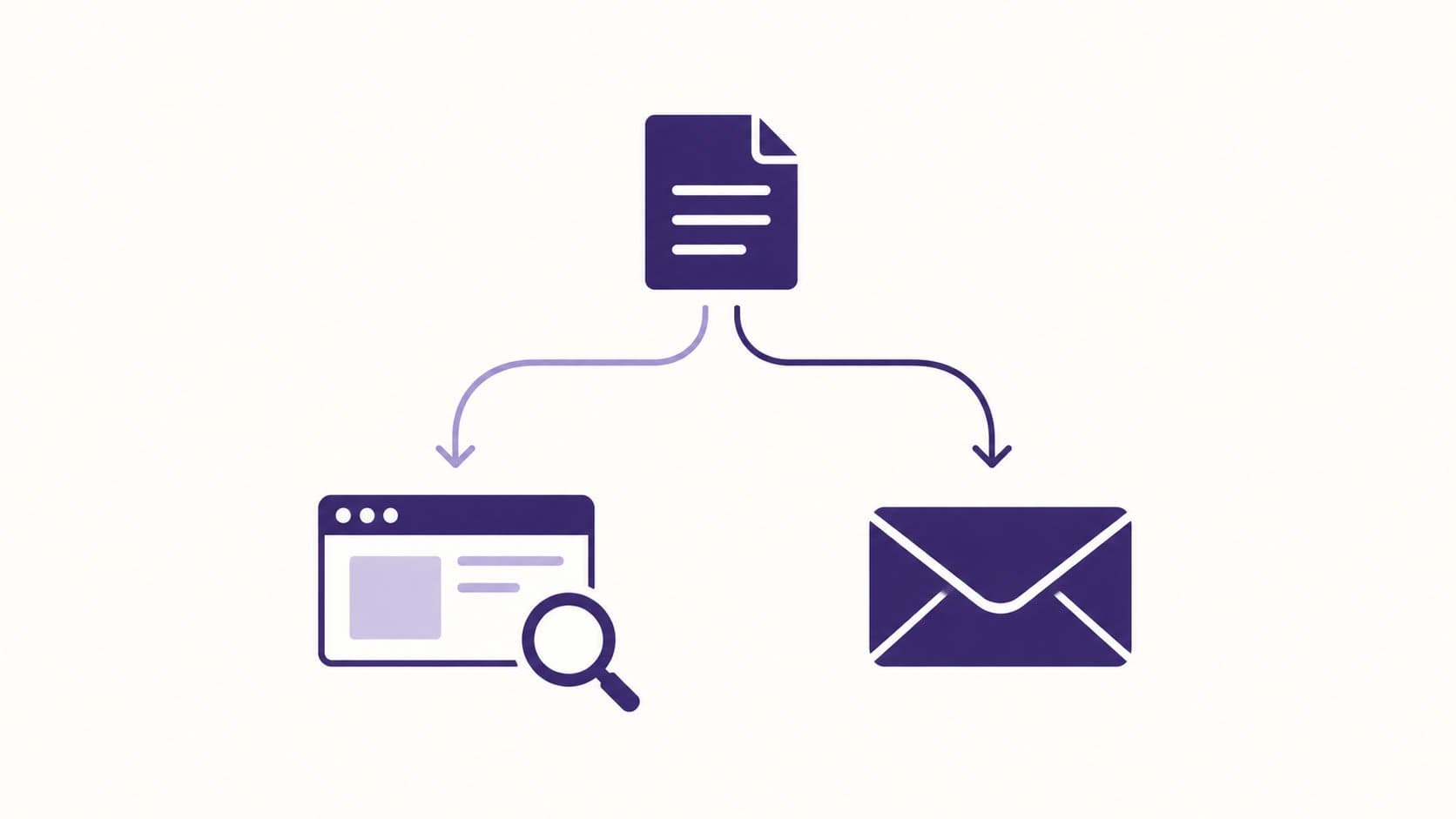
Outrank Blogs sits in a different category from the six platforms above. It is a hosted blog builder, not a traditional newsletter sender. Every post you publish becomes a public web page with its own URL, structured data, sitemap entry, and RSS feed. Readers can subscribe to receive updates, but your content is not inbox-only: it exists on the web first, and in inboxes as a secondary channel.
The free plan supports unlimited posts and up to 10,000 monthly visits, with a free custom domain connection and a block-based editor that requires no technical knowledge to use. IndexNow integration means new posts get submitted to search engines faster than most alternatives.
What Outrank Blogs does well on the free plan:
Every post is publicly indexed from publication with structured data, a sitemap, and RSS built in
Free custom domain support: your content is at your URL on the free plan, not on a platform subdomain
No subscriber cap, no send limit (distribution is RSS-based)
Clean block-based editor with SEO fields built into the publishing flow
The paid Autopilot plan ($99/month, 30 AI-written SEO articles per month) is the natural upgrade path for writers who want to produce more content than they can write themselves
What Outrank Blogs does not do well:
If email deliverability, subscriber analytics, and inbox-centric distribution are the core of your workflow, Outrank Blogs is a complement to those tools, not a replacement
No built-in subscriber discovery network comparable to Substack Notes or Beehiiv's recommendation feed
RSS-based distribution is less familiar to audiences accustomed to email newsletters specifically
The specific use case it fits: you want your posts to be discoverable by people who have never heard of you, through Google and link sharing, rather than only through subscribers you have already acquired. You want a real custom domain on the free plan. And you want your writing to compound over time as an SEO asset, not just as a sequence of emails sent to a list.
Start a free blog with Outrank Blogs
Which Platform Should You Choose?
| Your situation | Best pick |
|---|---|
| Starting a newsletter with plans to charge for paid subscriptions | Substack |
| Building a newsletter-first publication and want growth tools | Beehiiv |
| Technical creator who wants full control with no platform cuts | Ghost (self-hosted) |
| Large email list, selling products or courses | Kit (ConvertKit) |
| Small business sending regular email to customers | MailerLite |
| Starting fresh with no existing list | Skip Mailchimp, start with Beehiiv or Kit |
| Writer who wants Google to find your work as well as subscribers | Outrank Blogs |
| Already on Substack but want a web-searchable home for your writing | Outrank Blogs alongside Substack |
How This Comparison Was Made
We evaluated each platform using its current published free-tier terms, focusing on what you actually get without paying: subscriber limits, send limits, web hosting and SEO capabilities, custom domain availability, and ease of first publish. Platform order reflects free-plan value. This article covers no sponsored placements.
Free-tier terms change frequently across all platforms. Always verify directly at each platform's pricing page before committing.
Outrank Blogs and the Missing Piece in Most Newsletter Stacks
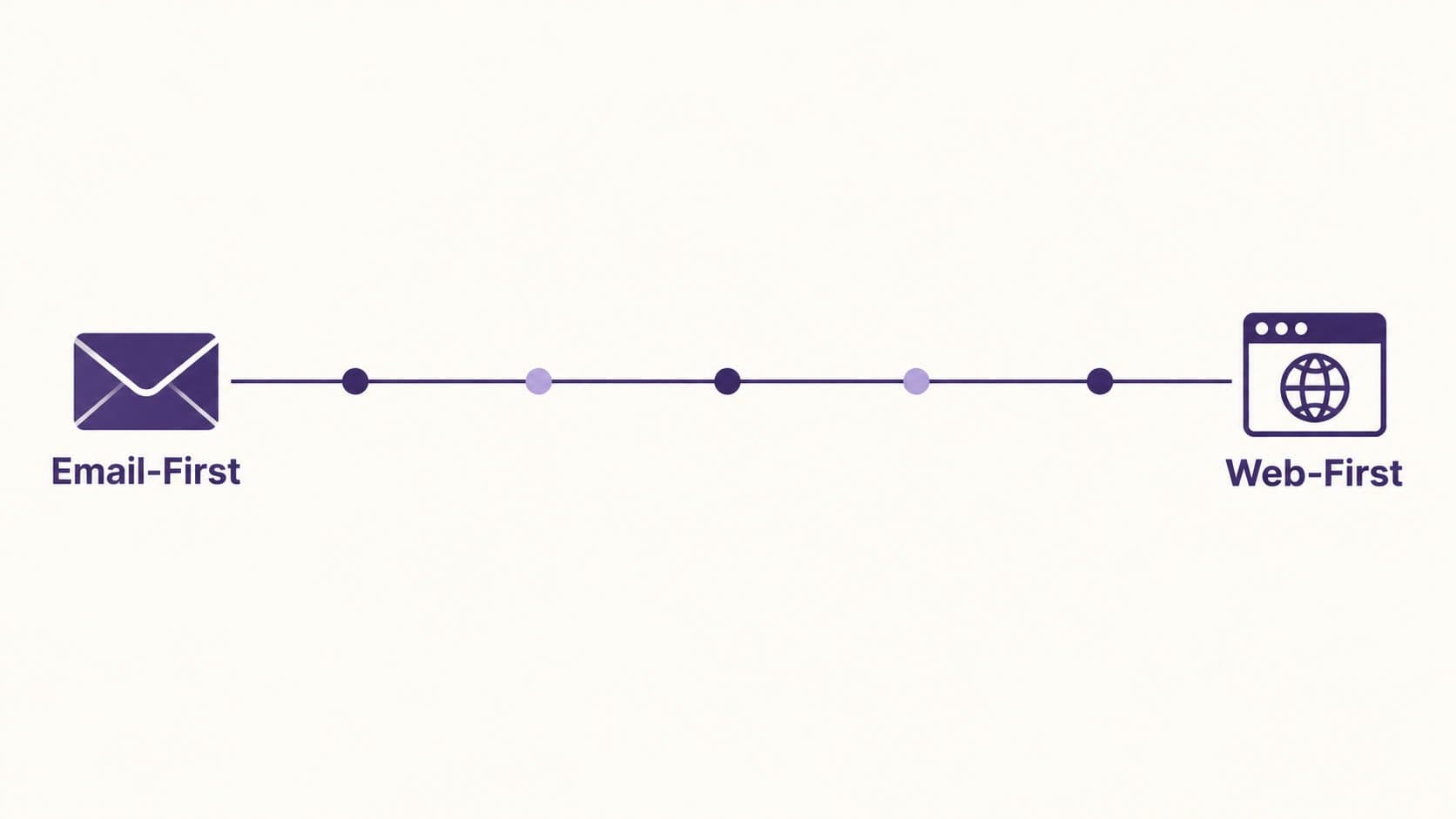
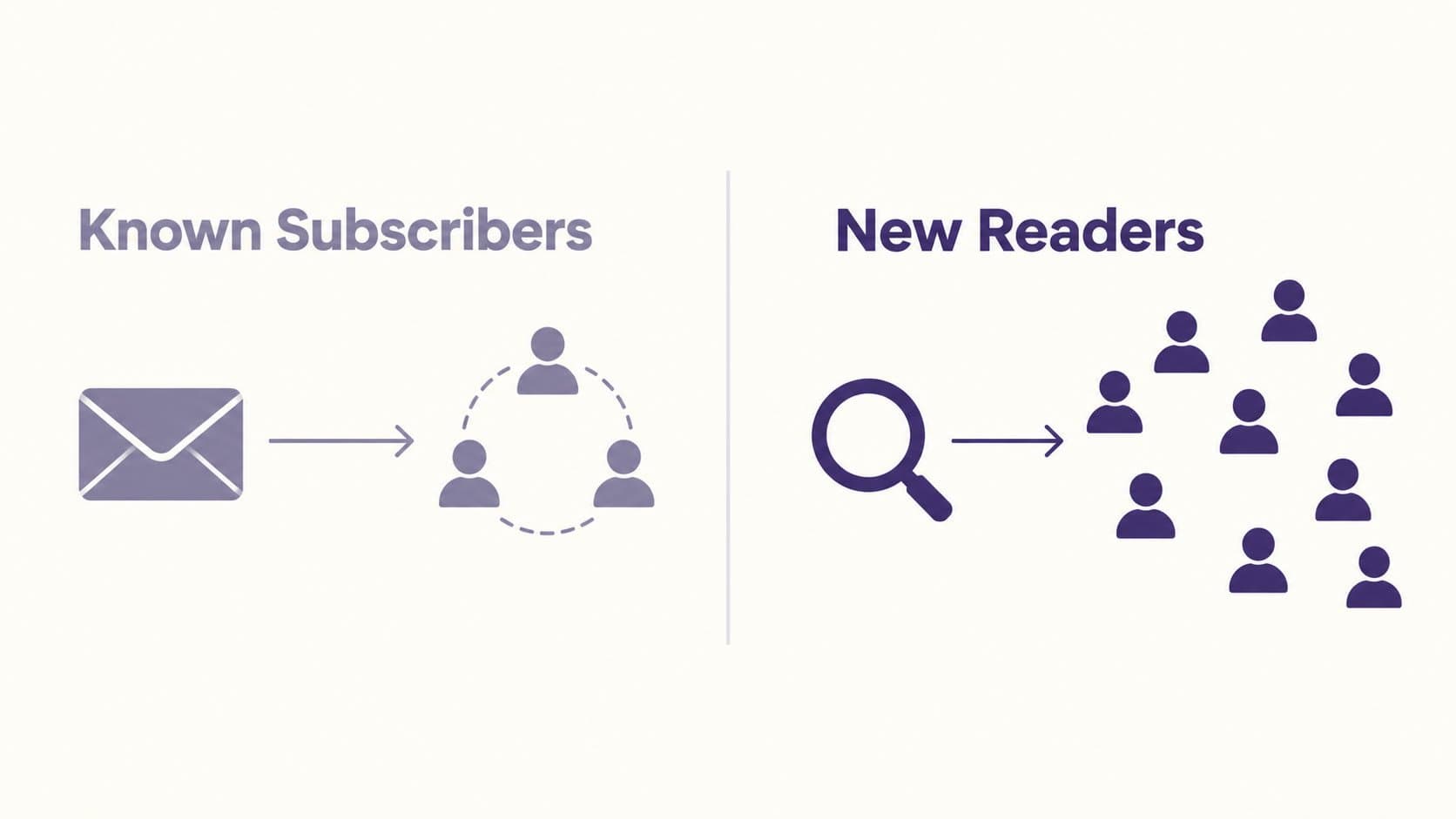
Every platform in this comparison solves the inbox problem well. What most of them do not solve is the discovery problem: a reader has to already know you exist to subscribe. That is the structural challenge of newsletter-first publishing.
A blog on Outrank Blogs solves both at once. Every post gets indexed by search engines, lives at a URL that can be shared or found through organic search, and goes out to subscribers through RSS. New readers find you through Google. Existing subscribers get notified through the feed. The free plan supports unlimited posts and 10,000 visits per month at your own custom domain.
If you are already publishing on Substack or Beehiiv, running an Outrank Blogs site alongside your newsletter gives you a web-searchable archive of your work without abandoning your existing subscriber list. If you are starting from scratch and care about building search traffic over time, it gives you a publishing base where both Google and your subscribers can find your writing.
Setting up the free plan takes under an hour. Get started with Outrank Blogs for free, or read the Outrank Blogs vs. Substack full comparison if you are currently on Substack and want a direct side-by-side before making any changes.
Frequently Asked Questions
What is the best free newsletter platform overall?
For most newsletter writers starting out, Substack is the easiest entry point: no subscriber cap, no send limit, and a built-in reader network through Substack Notes and Recommendations. Beehiiv is a strong second if you want more growth-specific tools, a custom domain on the free plan, and a slightly better web publication. Kit is the best choice if list size matters most on the free plan, since its 10,000-subscriber free tier is the highest in the market.
Which free newsletter platforms include indexed web posts?
Substack, Beehiiv, and Ghost (self-hosted) all give you a publicly accessible web archive that search engines can index. Outrank Blogs is built specifically as a web-first publishing platform with SEO infrastructure (structured data, sitemap, IndexNow) built in from the start. Kit, MailerLite, and Mailchimp are email-only platforms: your content does not exist as public web pages.
Is Mailchimp still free?
Mailchimp still offers a free plan, but the limit at the time of writing is 250 contacts and 500 emails per month, with a 250-per-day cap. Mailchimp also counts unsubscribed contacts against your limit, which makes the usable ceiling lower than 250 in practice. MailerLite (500 subscribers), Beehiiv (2,500 subscribers), or Kit (10,000 subscribers) are better free-tier alternatives for anyone starting fresh.
Can I use Outrank Blogs as a newsletter platform?
Outrank Blogs is a blog builder with RSS subscription support, not a traditional email newsletter platform. Your posts are public web pages first, with RSS distribution that allows readers to subscribe and receive updates. It is not designed to replace a dedicated email sender like Kit or MailerLite. Where it fits best: writers who want their content to live at a real URL, rank on Google, and be discoverable by people who are not already subscribers, with email/RSS distribution as a secondary layer rather than the primary one.
Do any free newsletter platforms allow a custom domain?
Ghost (self-hosted) gives you full custom domain support at no platform cost beyond your server fees. Beehiiv and Outrank Blogs both include custom domain connection on their free plans. Substack offers a custom domain for a one-time $50 fee, but the sending address stays at [yourpublication]@substack.com. Kit, MailerLite, and Mailchimp all require a paid plan upgrade to connect a custom domain.
What happens to my subscriber list if I want to switch platforms?
All platforms in this comparison allow you to export your subscriber list as a CSV file, meaning you own your list and can take it to any other platform. Always export your subscriber list before closing an account, and confirm the export process before choosing a platform if long-term portability is a priority.
Are free newsletter platforms worth starting on?
Yes. Every platform in this comparison gives you enough on the free tier to build a real newsletter, grow a subscriber list, and test your content with an audience before spending anything. The main limits to watch are the subscriber cap (Mailchimp at 250 is now too low; Kit at 10,000 gives the most room) and whether the platform keeps your content inbox-only or gives you a public web presence where new readers can discover you.