You've been meaning to do this for a while.
Maybe it's the pasta sauce you've been refining for years. The restaurant recommendations your friends keep texting you to send. The sourdough obsession that has taken over your kitchen bench.
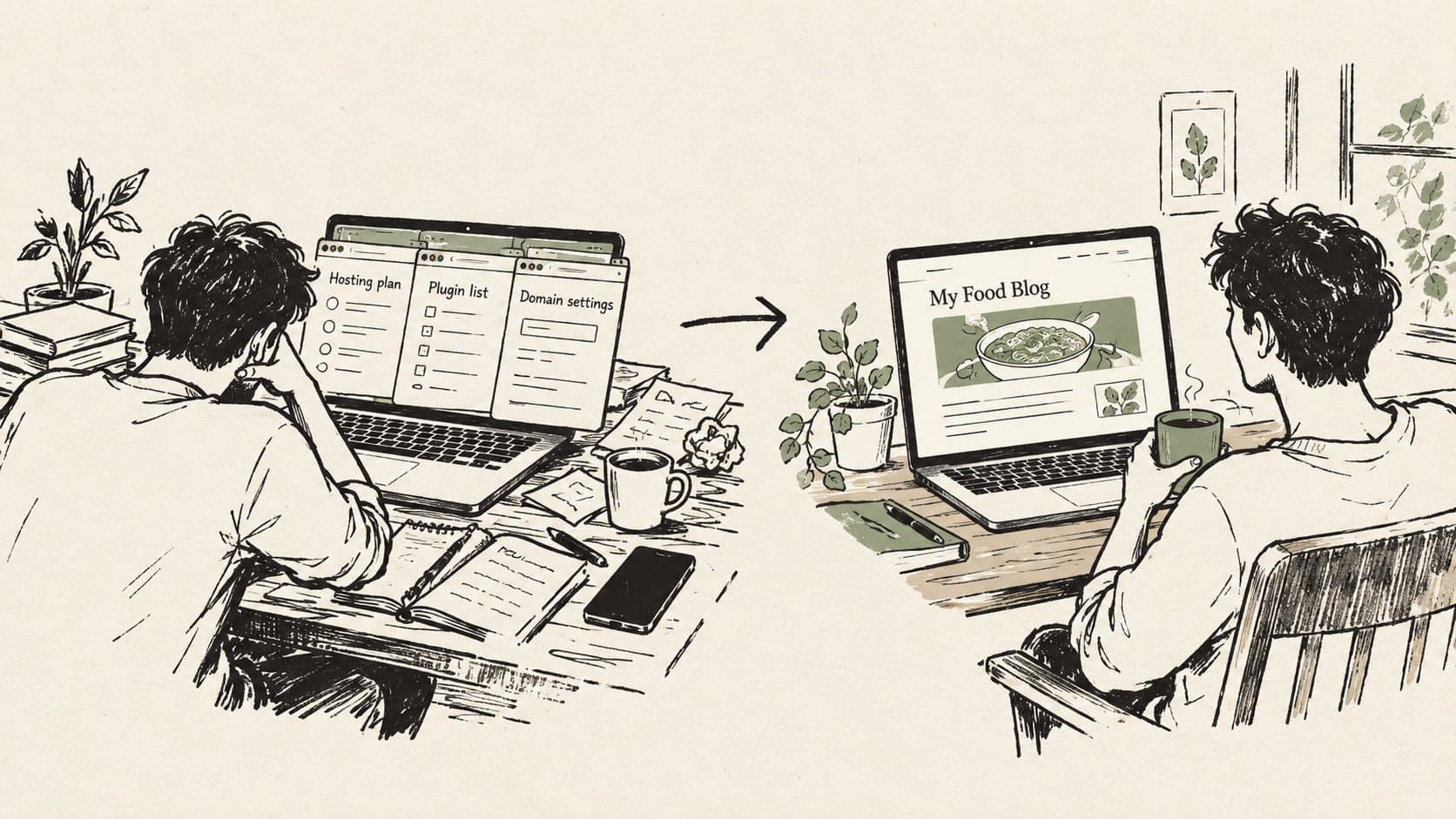
Starting a food blog sounds simple until you're four browser tabs deep into hosting comparisons and WordPress plugin reviews, and suddenly you've decided to do it next month instead.
This guide cuts through that. You'll pick a niche, choose a free platform with proper SEO built in, write your first posts, and get your blog live without paying for hosting or configuring a plugin stack.
The short answer: To start a food blog, pick a tight niche, get a free hosted platform that handles your sitemap, structured data, and indexing automatically, and publish at least five posts before you tell anyone it exists. Setup takes under an hour. The rest is showing up consistently.
The Platform Decision (Where Most Food Blogs Go to Die)
Most guides put niche first. We're putting platform first because it's where most aspiring food bloggers stall for weeks.
The standard advice: get self-hosted WordPress. That advice also comes with a monthly hosting bill, a theme purchase, a recipe card plugin to handle structured data, and a setup afternoon before you've written a single recipe.
Here's an honest look at what's actually free:
| Platform | Free plan cost | Visit/post limits | Custom domain | SEO built in | Setup time |
|---|---|---|---|---|---|
| Outrank Blogs | $0 | 10,000 visits/month, unlimited posts | Yes (or free subdomain) | Sitemap, RSS, schema, IndexNow | Under 30 min |
| WordPress.com | $0 | Unlimited posts, capped storage | Requires Personal plan at $9/month | Basic | 1–2 hours |
| Blogger | $0 | Unlimited | Free custom domain | Basic sitemap | 30 min |
| Medium | $0 | Unlimited | No (partner-only) | Minimal | 10 min |
| Substack | $0 | Unlimited | Limited on free | Newsletter-focused, limited SEO | 10 min |
Medium and Substack are genuinely good if your goal is building an audience through a newsletter. They are not built for people who want their chocolate chip cookie recipe to appear in Google search results.
For that, you need a platform that handles sitemap submission, article schema markup, and IndexNow pings to search engines. Outrank Blogs ships all of this out of the box on the free plan: $0, up to 10,000 visits a month, unlimited posts, a free outrankblog.com subdomain or your own domain, and a block-based editor that works like writing in Notion.
No plugins. No hosting invoice. No theme purchase.
Explore the Outrank Blogs free plan
Step 1: Nail Your Niche Before You Name Your Blog
"Food blog" is a category, not a position. The blogs that actually get found are almost never "my recipes." They are:
30-minute dinners for working parents
Authentic South Indian home cooking for diaspora families
Budget meal prep for people living alone
High-protein vegetarian recipes for lifters
A tight niche means less competition on Google, more loyal readers, and something clear to say in your About page. Three questions to answer before you pick a name:
Who is this actually for? A specific person, not a general audience.
What problem does it solve? Time, budget, dietary needs, learning a technique, craving a specific cuisine.
What do you know well? Not expertise: genuine familiarity. A year of making something others haven't figured out is enough.
Once you've answered those three, your name, URL, and first 10 post ideas basically write themselves.
Step 2: Set Up Your Food Blog (Under an Hour)
With Outrank Blogs, setup is:
Sign up for the free plan at outrank.so/free-blog. No credit card required.
Choose a template. The layouts are clean, mobile-first, and work well for food content out of the box. Five templates are available on the free plan.
Pick your URL. Start with a free outrankblog.com subdomain, or connect a domain you already own.
Write your About page first. This tells search engines and first-time visitors what the blog covers and who writes it. It also keeps you focused.
Publish your first post. The editor uses content blocks (text, images, headings). Structured data and sitemap entries are generated automatically in the background.
That is genuinely it. You are not configuring a Yoast sitemap, purchasing a WP Recipe Maker licence, or pointing DNS records at a hosting server. You write, you publish, the SEO scaffolding is already there. The free plan also includes three AI-written posts if you want a running start.
Step 3: Your First Five Posts
The most common reason food blogs never launch: waiting until there are "enough" posts to feel like a real blog. There is no number that feels like enough.
Start with five:
About post. Why this blog exists, what your cooking angle is, what readers can expect. Written conversationally.
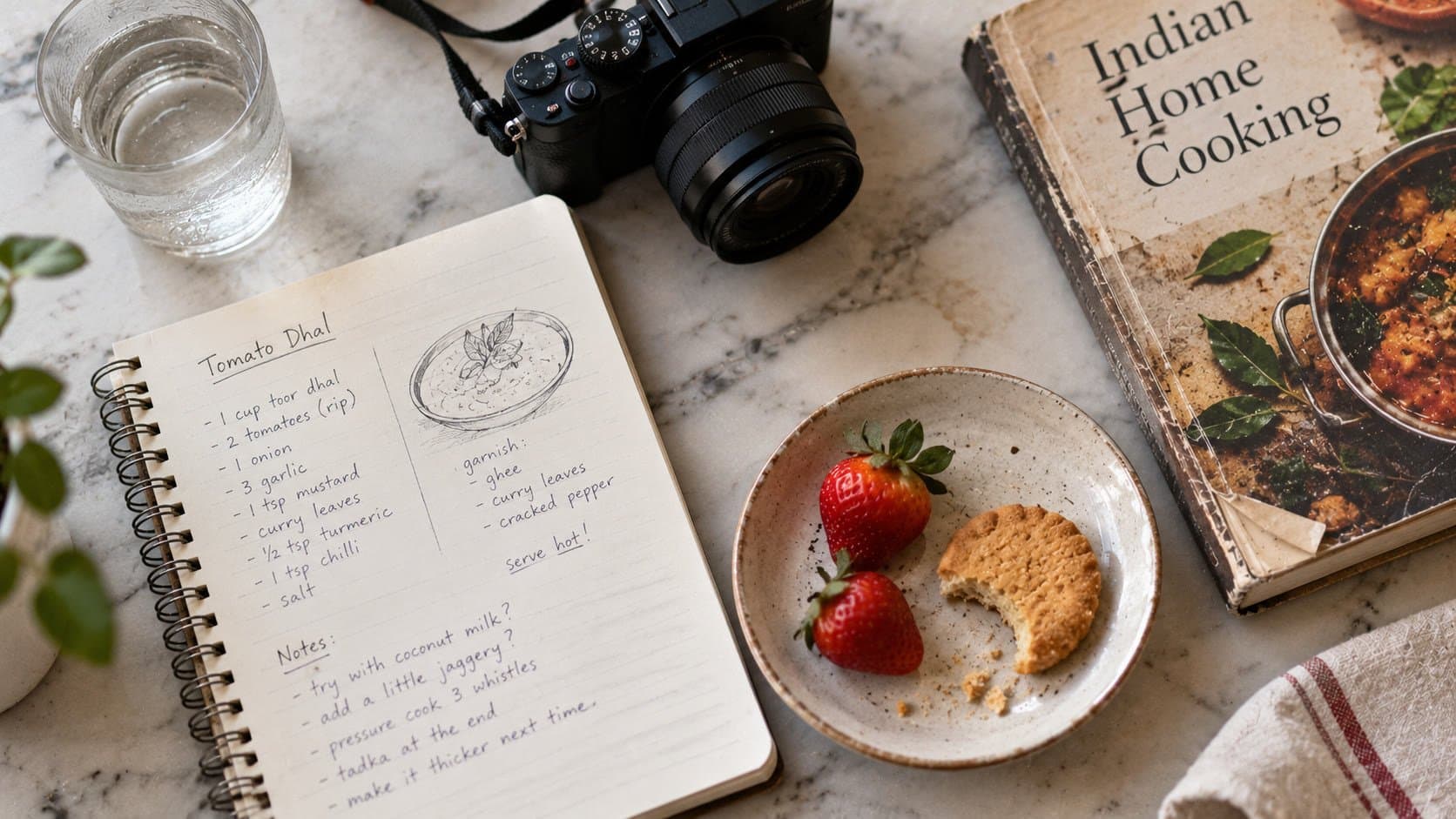
A recipe you've made 20 times. Something you know cold, with clear steps and at least one good photo.
A recipe that solves a specific problem. Fast, cheap, one dietary restriction, whatever matches your niche.
A technique or tip post. One thing you know about cooking that most people do differently or haven't tried.
A roundup. "My 5 Favorite [X] Recipes for [Occasion]": easy to write, genuinely useful, and gives readers multiple entry points.
Five posts is a real blog. It gives Google something to index and gives first-time visitors a reason to stay more than 30 seconds.
Step 4: Basic SEO for Your Food Blog
You do not need to become an SEO professional. You need to do a handful of things consistently:
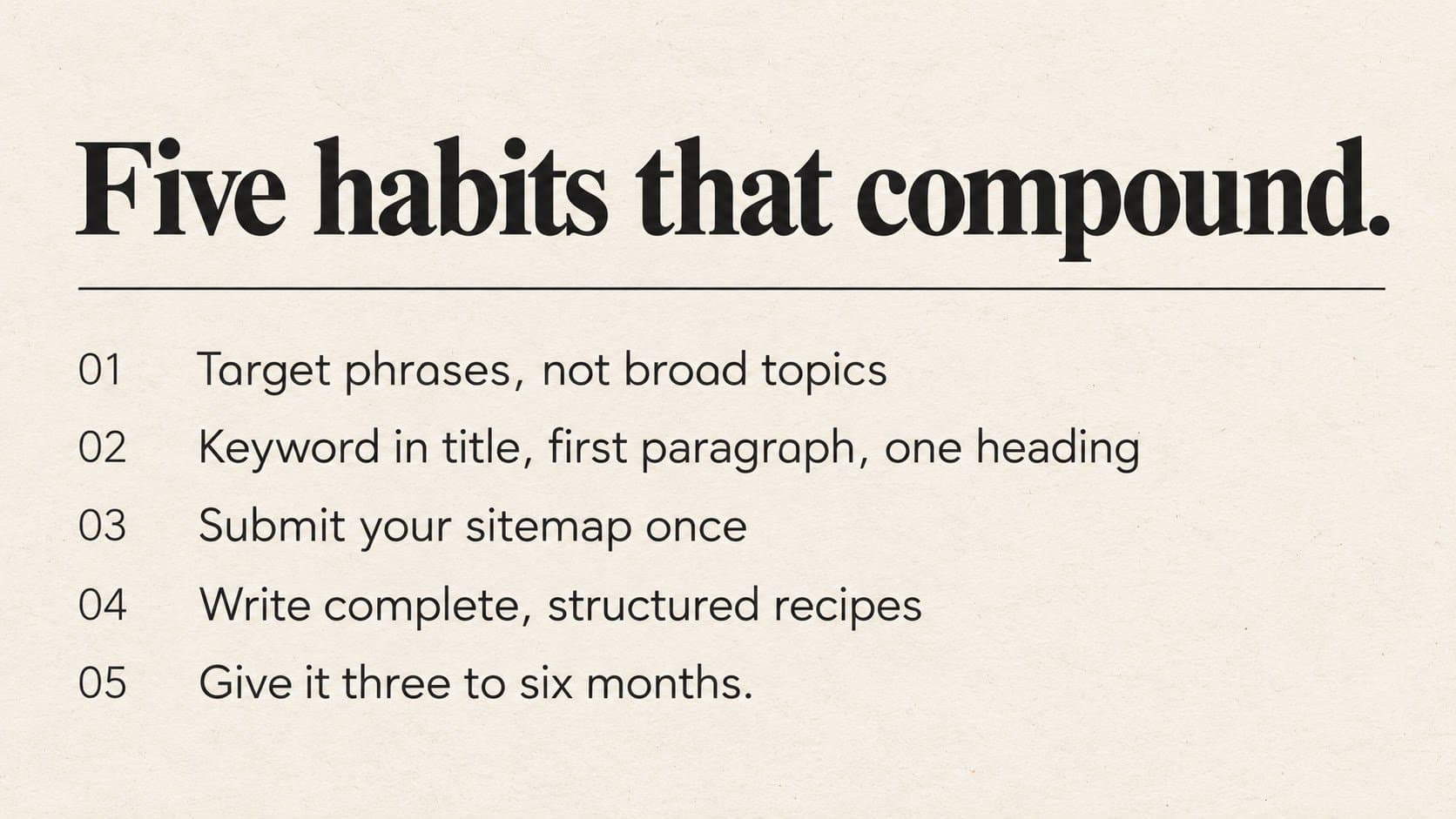
Target specific phrases, not broad topics. "Pasta recipe" gets competed on by 50 million sites. "Creamy tomato pasta with canned tomatoes" is what someone with a specific problem is searching.
Use the phrase in your title, first paragraph, and one subheading. That is enough to start.
Submit your sitemap to Google Search Console. Outrank Blogs generates it automatically: copy the URL, submit it once, and Google starts finding your new posts when you publish.
Write complete recipes. Include ingredient quantities, cook time, and numbered steps. Well-structured recipe content is what search engines and AI tools look for when surfacing food content.
Be patient. New blogs typically take 3 to 6 months to see meaningful organic traffic. The posts you publish in week one pay off in month four.
See how Outrank Blogs compares to other free platforms
Our Methodology
Our team evaluated free blogging platforms against five criteria: upfront cost, visit and post limits, custom domain support, built-in SEO features (sitemap, structured data, IndexNow), and realistic time-to-first-post. The comparison table reflects product details current as of October 2026. Pricing and feature limits on all platforms can change: verify before committing to any paid tier. Setup steps for Outrank Blogs were confirmed against the current product version.
Your Food Blog Doesn't Have to Wait
Outrank Blogs is built for exactly this situation: you want a blog that looks professional, handles technical SEO automatically, and costs nothing to launch.
The free plan covers up to 10,000 visits a month with unlimited posts. That is enough to get started, build an audience, and figure out whether food blogging is something you want to keep doing before spending anything.
If you eventually want content on autopilot, the Organic Growth plan ($99/month) handles that: 30 SEO articles a month, built-in keyword research, and automatic internal linking. File that away for later. Right now, the free plan is all you need.
Start your free food blog on Outrank Blogs
Frequently Asked Questions
Do I need to pay to start a food blog?
No. Outrank Blogs' free plan covers up to 10,000 monthly visits with unlimited posts and no credit card required. You get a free outrankblog.com subdomain or can connect your own domain. Built-in features include a sitemap, RSS feed, structured data, and IndexNow indexing, so you are not paying extra for SEO basics.
Do I need to know how to code to start a food blog?
No coding is required. Hosted platforms like Outrank Blogs use block-based editors similar to Notion or Google Docs. You write in the editor, hit publish, and the structured data and sitemap are generated automatically. A complete, SEO-ready food blog post requires zero HTML.
How long does it take to get a food blog live?
The technical setup, choosing a platform, picking a URL, writing your About page, and publishing your first post, can realistically be done in under two hours. Writing and photographing enough content to feel like a real blog takes longer: plan for a few days to produce five solid posts before you announce it publicly.
What is the best niche for a food blog?
There is no single best niche, but narrower ones consistently outperform broad ones for new blogs. Instead of "healthy recipes," try "meal prep for solo households under $50 a week" or "high-protein vegetarian dinners." A tight niche attracts more loyal readers and ranks faster on Google because you are competing with fewer, often lower-quality sites.
Can I make money from a food blog?
Yes, though it takes time. The main paths are display ad networks (Journey by Mediavine accepts blogs from 1,000 monthly sessions, while the full Mediavine network requires 50,000+), affiliate links to kitchen equipment and ingredients, and brand partnerships. Most food bloggers do not see meaningful income for 12 to 18 months. Build traffic first on a platform with solid SEO foundations, and the monetization follows.
Does a food blog need structured data?
Structured data helps search engines understand and surface your content accurately. Outrank Blogs automatically generates article schema and breadcrumb markup for every post, which improves how your content appears in search results and AI answers. For recipe-specific rich results (the card showing cook time, ingredients, and ratings), you would need to write recipes in a structured format and use a platform or plugin that generates Recipe schema specifically.
What is the difference between starting a food blog for free versus paid hosting?
The main practical differences are custom domain ownership, SEO control, and monthly cost. Free platforms like Outrank Blogs give you a professional subdomain at no cost, with built-in SEO tools, and let you connect your own domain later without rebuilding anything. Paid self-hosted WordPress gives you more plugin flexibility but requires managing hosting, updates, and a plugin stack from day one. For a new food blog, starting free and upgrading once you know it has legs is the lower-risk path. You can read a fuller comparison in our guide to starting a blog for free.